Seems My Kid Likes Tennis … Now What?
Buying the proper tennis equipment for a child
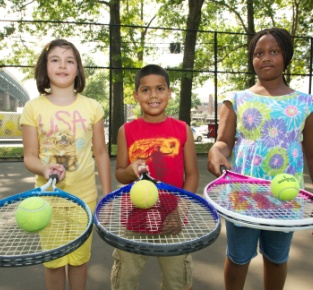
A common question that tennis instructors often hear from parents is what is the right racquet to buy for their kids. Unlike adult racquets, junior racquets come in different lengths to complement a child’s muscular development, eye/hand coordination and skill level. Choosing the right size can make it easier to hit the ball, which of course makes the game more fun! Here are a few tips if you are thinking of buying a tennis racquet for a child.
Most kids under the age of 10 require a shorter racquet than the standard 27-inch length of a full-sized racquet. Starter junior racquets come in four common lengths: 19-inch, 21-inch, 23-inch and 25-inch, and are relatively inexpensive, starting at about $20. Most are made of lightweight aluminum and have the same grip size, which is fine for novices. For more experienced players, graphite and composite racquets are “cooler” and add more power to shots. These racquets are at least double the cost, however, and are generally available only in the 25-inch and 27-inch sizes.
When choosing the right size, the first consideration is the height of the child. If the height is unknown, age is the second option. In general, tots three- to five-years-old and less than 40-inches tall should start with a lightweight, aluminum 19-inch racquet. Below are general guidelines for older children:
 ►21-inch racquet 41- to 44-inches in height (ages five and older)
►23-inch racquet 45- to 50-inches in height (ages seven and older)
►25-inch racquet 51- to 56-inches in height (ages eight and older)
So now you think you have the right racquet for your child, how about the right tennis ball? The standard, yellow tennis ball is not the only ball you can buy any more. Thanks to national initiatives led by the USTA, ITF and the tennis industry, low-compression tennis balls are now widely available and recommended for young players. Like racquets, these balls come in various sizes and are designed to be slower and bounce lower than standard tennis balls. The balls can be found now in many sporting goods stores and are sold in cans of three, as is the tradition in tennis.
Junior tennis balls are color-coded based on age and ability. For young children, especially kids ages five and under, we recommend starting with a foam ball, which travels the slowest and allows the most time to track and hit. These balls are available in a standard and “grapefruit” size. The next step up is the red/yellow ball, which is the same size and feel as a tennis ball, but moves slower and travels less distance. This is a good choice for most beginners eight and under. The next stage is orange/yellow, followed by green/orange. If you are buying as a gift, a safe choice would be purchasing several types that can be used progressively as a child’s skills improve.
Finally, for the kid who has everything, lightweight portable tennis nets are now available from many tennis manufacturers such as Head and Wilson that can turn a driveway or street into a temporary tennis courts in minutes. With proper supervision, this can provide a fun alternative for parents and kids who like to practice or don’t live near a public tennis court. Costs for these makeshift courts range from $60-$150.
Our experience has shown that just having tennis equipment at home can make a big difference whether a child wants to take up or continue playing the “sport of a lifetime.”
Good luck and hope to see you and yours in the parks next summer!