The Biofile: Billie Jean King
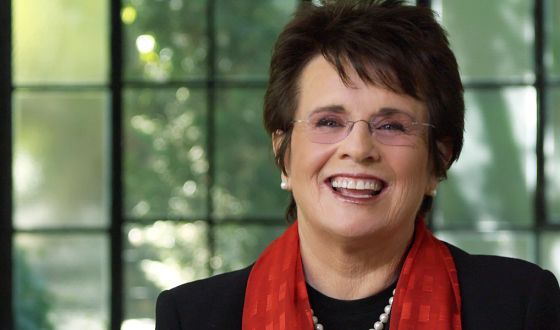
Status: Hall of Fame tennis legend.
DOB: Nov. 22, 1943 in Long Beach, Calif.
First tennis memory: That’s actually one of my questions when I’m coaching. That’s fantastic. That’s the first time somebody’s asked me that. My first memory in tennis … well, I’ll tell you how I got into tennis. Susan Williams, in fifth grade, said to me, ‘Do you want to play tennis?’ And I said, ‘What’s tennis?’ So that’s the first time I ever heard the word. I went out with her to hit. And I really liked it. It was fun. And then the second time I ever played was at the public parks pre-instruction group clinic. That’s when I decided, at the end of that day, to be number one in the world … I wanted to be number one in the world.
I’m sure I whiffed a lot with my friend Susan at her club, it was a country club. We played on the same softball team too and our coach said that there was free instruction every Tuesday at Helton Park. So that’s where I decided to be number one … at Helton Park. I was really lucky, the stars were aligned. Susan asked me to play and it was Long Beach, Calif. Where there was good weather and a great public parks system. We also had a great instructor in Clyde Walker who I absolutely adored from day one. He was an older guy at the time at 61-years-old and I just loved him. He made it fun, so he was really important. I had really positive memories, even from the first time I played tennis.
Tennis inspirations: When I started to play, right from the beginning, I went to the library and checked out all three books. In those days, I read everything I could about the history of the sport. I was inspired by all of the champions that I read about as a child. Because I read about them right away. I mean, it was like the first week that I was hitting balls at the park and I just loved the sport. I remember Tennis With Doris Hart … she was a great champion. Within that book, she talked about all the women’s champions of her era. I learned all about them. And then there was Use Your Head in Tennis by Bob Harmon … one of the first instructional books that I read. I love that book. And there was a book that had champions from each U.S. Open. So I just read about the history of the sport all the time.
I was very fortunate to grow up in Southern California where we had so many champions. I ended up getting to meet Darlene Hard and she hit with me. Everybody in Southern California plays in the parks and were pretty casual. We would go to clubs and then the club people would play at the parks, and we would go back to play at the country clubs. It wasn’t as elitist as it is probably in other parts of the country, so that was helpful.
Greatest sports moment: I never think about my tennis career. I think about what we, a group of us, tried to do off the court. There’s many moments … fighting for professional tennis in the 1960s and the sad times when the males didn’t want us to be part of their association. I really wanted us to be together, because as amateurs, the men and women were always together. That was a very hurtful time … it was a very tough time. There were nine of us called the Original Nine who signed the contract with Gladys Heldman in Houston, Texas in 1970 at a tournament. That was really the birth of women’s tennis … the way we know it today. It was a very important moment. I have accomplished a lot of really great things, but I really don’t think about my time on the tennis courts being the greatest. The stuff I have done off the court, to me that’s lasting. Performing is very temporary. So if I can connect the generations and have each generation pass the baton on to the next generation, we will continue to shape the future of the sport. That’s what makes me happy … when I connect the generations.
My greatest moments continue to this day. I don’t have to be a tennis player to keep helping the sport or helping equality. I think one of my greatest moments is when they named the National Tennis Center after me. It was Aug. 28, 2006 and everybody was so kind to me. It was a great evening … like a culmination. You have to understand, we didn’t get along in the old days, and here they are naming a facility after me. I mean, they’re almost suspending me at one point in my career, and years later, they’re naming their facility after me!
But that’s what’s really important … always forgive and keep moving on. I never held any bitterness, and obviously, we have new management all the time. This is my generation of people, so they understood how the game changed in the 1960s, a lot of things changed in the 60s. Sports is a microcosm of society, and our sport changed a lot then too. There was a lot of chaos and upheaval, just like the rest of the world. We really reflected that in our sport, by the big changes we had in the 60s and the 70s. I really like to continue to just improve our situation and have all the generations really work together and help each other.
Most painful moment: When the guys didn’t want us to be with the association … that was and still is a very painful time when I think about it. Those were my friends, the guys I ate dinner with and went dancing with. I still love them very much, but we could have lived even better when we’re always together. I just think when people work together, both men and women, we always have more strength, more ideas, more adversity, and all the things that equal creativity.
If we would have been together in 1970, it would have been revolutionary, because it would have been a sport that’s actually co-ed … together as a professional sport. Even today, if we would do it, it would be almost ground-breaking as well. And this is what now? Forty years later? So it’s amazing how we could have been just eons ahead of everybody else.
The best you ever felt on-court: My skills were the best in the early 1970s. I don’t think about tennis very much. I like to play tennis and really played great against Evonne Goolagong in the finals of Wimbledon in 1975. I think it was 29 minutes. The final wasn’t very good for the fans, but I was in a zone, and every time she started to get back in the match, I just revved it up another two levels and she never saw daylight.
Funniest tennis memory: Always in doubles and mixed … oh my God it’s your partner who makes it fun! Like Owen Davidson, my mixed-doubles partner from Australia. Davis Cup player, lefty, Mr. Twitch. He and Andy Roddick could match up twitches and he’s always looking in the audience, and I’m just the opposite. We really mixed well. There were always funny things happening. We won a mixed-doubles at Wimbledon because we mishit! We were going to lose and I had a chance to win three titles that year and we were losing to this team that we should have killed! I won’t go into the names because that’s not fair, but they were killing us. They were playing much better than we were. He finally hit something off the frame up at the net. I mean, it just barely touched the frame and just bounced over. And that was a turning point. You look back and wonder how that was possible? There’s always funny times. Like when people forgot their pants or were always borrowing things. We were always laughing. I must say, we always had a good sense of humor. I think that’s what got us through everything. Everybody had a different personality which I think made the game exciting.
Most embarrassing tennis memory: When I was a kid, I lost love and love to Caroline Loop in Arcadia and it was the first time I made the front page of our Long Beach Press-Telegram. I kept saying to my dad that Caroline was really a good player. I lost to her in the public park nationals, which was a big tournament for us in those days. So my dad told me that day, ‘I don’t ever want you to read your press clippings again.’ And I kept my word with him. It was one of the greatest lessons he ever taught me. He said, ‘Do you want to know why? Because they’re talking about yesterday. And yesterday doesn’t count anymore. It’s what you do today.’ That just stuck with me. My dad said some great things. Fathers are very important to girls … I don’t think they realize just how important they are to girls.
What was your favorite tournament: I love team tennis the best [smiles]. I love team sports. It’s the best, as far as women’s doubles and singles, I grew up thinking that Wimbledon was it. You have to understand that in my day, that was head and shoulders above the other Grand Slams. Then, when we were trying to change the game, we didn’t care about winning Grand Slams because our mission was more about taking tennis to the people. Like the Virginia Slims Tour … when we started women’s professional tennis–that’s what was really important to us … taking tennis to these cities, making it the most important thing in their lives. I felt that every day and every tournament was important. But Wimbledon was the most important … just because of the way I grew up … what I read … the culture at that time. In my younger days, if you won Wimbledon, you were considered number one in the world. It was very different than it is now. If I grew up today, I may not have the same perception. It’s very elegant. There’s something about Wimbledon I really like. I like keeping great traditions and getting rid of the ones that don’t help the sport. There are some traditions that I think are good sometimes, but most people who want to change history have a great respect for history.
Who are your favorite players to watch: Oh my God, all of them. I wish I could hit one ball like that. I think Federer and Nadal are a cut above the rest. Now, Djokovic and Murray … I think Andy Murray is unreal. And on the women’s side … if Serena can stay dedicated and remain injury-free, she has the potential to be the greatest player that ever lived.
Career accomplishments: Tennis professional from 1968-1983; winner of 39 Grand Slam titles–12 singles titles (including six Wimbledon and four U.S. Open championships), 16 doubles titles, 11 mixed-doubles titles, victorious in 11 Federation Cup competitions, and a three-time Fed Cup captain. In 2006, the USTA National Tennis Center was renamed the USTA Billie Jean King National Tennis Center. She was inducted into the International Hall of Fame in 1987.