The Game of Tennis Has Changed … Have Your Teaching Methods Evolved?
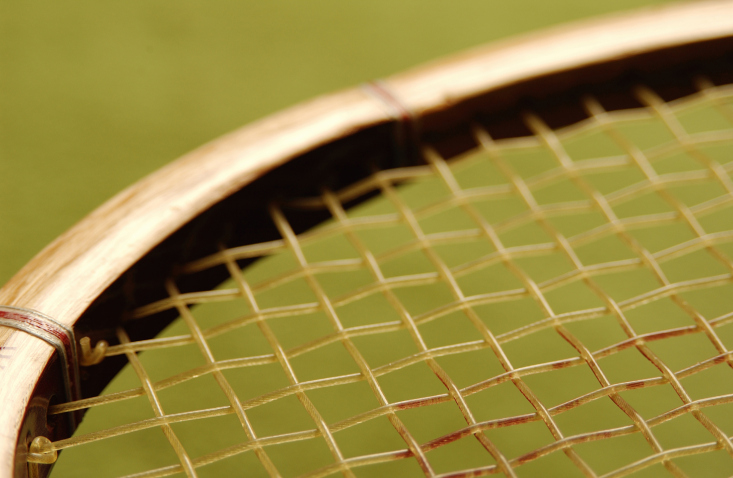
There has been a great deal written in recent years about how the game of tennis has changed, The game has seen bigger, lighter and more powerful racquets, along with slower surfaces, extreme grips and many other aspects of the sport have changed.
The many changes in the game have had a huge impact on the way that a tennis teacher approaches a student nowadays. When I was growing up during the 1970s, it was the end of the wooden racquet era, and my coach grew up hitting all of his strokes with a continental grip in what they used to call an all-court game.
I grew up learning that the best way to win a point is to keep the ball deep with patience, wait for a short ball, and then come to the net with a slice approach shot and finish the point with a good solid volley.
By the time I turned pro in 1983, the game was rapidly evolving to the type of tennis we have seen on the ATP Tour in recent years.
The first two players to take the game to the "Rafa Nadal" style of play were Bjorn Borg and Guillermo Vilas who relied less on their serve or net game, and more on their ability to cover the court perfectly, rarely making any errors from the baseline, hitting with a lot of heavy topspin.
In the mid 1980s, it was Ivan Lendl who took the game to the next level by adding a huge first serve to his flawless baseline game and amazing fitness. Players like Pete Sampras, Stefan Edberg, Boris Becker, John McEnroe and Patrick Rafter were still successful with the old school serve and volley game until the mid/late 1990s, but they were the last of the Mohicans.
Over the last decade, it seems that everyone on the tour adopted the "Bjorn Borg" school of thought. It seems like we will never experience a different style of play other than the one we are seeing now on the tour—best described as a "slug fest" between two hard-hitting individuals until one makes an error or hits a winner from the baseline. Of course there was, and still is, Roger Federer who is a “One Man Era.” His game is still based on the classic all-court game, mixing up paces and more net approaches than most. Federer remains the link between the two schools of thought. He managed to outclass the sluggers of his generation, but results in recent years have shown that the physical game of Nadal and Djokovic is the style that will rule the near future of pro tennis. The strongest evidence to support that theory is how the number of "Rafa Clones" exceeds the number of "Federer Clones.” It's hard enough to find anyone who will hit a one-handed backhand to begin with, and from that simple fact stems a whole different style of play.
When I retired from the pro tour and became a coach, I had to alter my ways of thinking as a teacher and adjust my methods to the changes that were taking place in the game.
With the new, lighter racquets and extreme grips that everyone is using, the balls travel with more pace and spin, and shots that were not possible for me when I was younger are relatively easy for the new generation. In fact, now at the age of 46, I think I can serve bigger than when I was in my prime, simply because the racquet and strings I use are that much more powerful.
The heavy topspin and high pace that can be generated with today's equipment changed the strategy of the game forever. In the past, it was almost impossible to win strictly from the baseline, you needed a variety of shots, a slice, a volley, being one dimensional was a minus.
In today's game, it doesn't really pay to go to the net, the passing shots that you will face are more powerful, and therefore, most players today don't really know how to volley correctly, as many top players on the pro tour have mediocre volleys at best.
Many coaches today are practical and recognize that it is really all about the baseline game. They primarily teach ground strokes, choosing to neglect teaching the slice, the volley or any sort of transition game. The problem I see with this approach is that almost everybody plays the same way today and this style of play can get predictable and relatively easy to throw off with a mixture of paces and spin that having a variety of shots allowed.
My approach is a fusion of the "old school" and the "new style.” I realize that today you need a huge weapon off the ground and that most of the points take place in the back court. Therefore, a big part of my sessions are dedicated to consistency drills and creating heavy, deep shots from the baseline, running around the backhand a lot, hitting with mostly an open or semi-open stance, and clearing the net by a lot to achieve depth and safety. I also make sure that they work on their serve more than any other shot, that is a given.
However, I still insist on teaching my kids the "all-court" game. I make them hit for a few minutes a day with one hand (continental grip) so they can get a better and more natural feel of the ball (99 percent of the kids play with two hands). I work on their volley constantly and daily, and also teach the slice, drop shot and dedicate time to their transition game, encouraging them to sneak into the net behind good quality shots instead of wasting a good shot. The kids need to be forced to work on those areas of their game because when you let them play on their own, they will never come to the net or use a slice. Most kids do what they are used to and in a real match, they are too scared or lack the confidence to try anything new. It can get a bit ugly in the beginning, especially trying to have them use the continental grip at the net and having them use one hand on the backhand volley and the backhand slice. It will take months of tedious repetition drills and specific games that force them to come in until they can implement it in a match, but I found that the slice and the volley are relatively easy to teach if you start it early on and stick to it.
In reality, you don't really need to have a "John McEnroe Volley" in today's game. All that is needed is to be good enough to be able to put away the easy volley after coming to the net behind a very good deep approach shot. Many who have a really good baseline game, but no net game at all, have to work much harder to win points. They need to hit a clean winner to win the point because they don't trust their net game. The same goes for the backhand slice. I still play the "old school" way with a one-handed backhand and due to my "old" age, I use the slice a lot. I find it very effective against the younger generation … they hate it! It makes them bend low on their knees which most of them don't do very well and it throws off their timing because they are not used to the different spin.
Having a backhand slice can come in very handy in today's game. It can be used to mix up your game, take pace off the ball and for defensive shots. Most players don't have it, which gives you an edge if you do have the ability to use it in a real match situation.
Tactically, today's game is a bit less sophisticated than 30 years ago. From a coaching perspective, it boils down to perfecting court coverage (good old footwork), a lot of inside out drills, and many baskets of serves.
The ability to have solid ground strokes is a given, the techniques and methods of teaching are almost scientific and most players don't have too many holes in their baseline game. There are many top players with perfect shots to imitate.
When I look at the top players in the game, even Rafa Nadal, the “King of Baseline,” I see them constantly adding variety to their game as they evolve as players. Rafa, adding a one-handed slice to his game, comes to mind. He also added the ability to come to the net and cut the points short later in his career … something that helped him regain the number one spot and will probably prolong his career. In fact, I see more players on the tour utilizing the slice as a surprise tactic, mixing up their game and trying to think a little outside the box. This will no doubt make the game more interesting to watch.
I think that serve and volley as a pure style of game, like the McEnroes and Edbergs of the past, will not come back since it's not practical because the returns are too big in today's game. But there is certainly reason to believe that coming to the net more often will make a mini-comeback. The serve and volley game can become predictable if used every point, but it can be a great "Plan B" when things go wrong, or when you are tired and in need of a quick point, or as an element of surprise in a big point when you want to put pressure on your opponent.
The difference in level at the top of the game is so small that any little edge can help win a match. The evolution of tennis has proved in the past that there is a reaction to every style of play. The top players of this generation have definitely perfected the way a ground stroke is being hit, but can you imagine a player that will possess the technical soundness of Djokovic, the court coverage of Rafa, the variety of shots of Federer, and the volley technique of John McEnroe? We still have yet to witness that phenomenon. The closest to ever play the game to perfection with a combination of old school tennis plus the style of the new era was Federer at his peak, but when Rafa's game ripened and proved to overpower Federer's more flashy game. The question remains: “Will the next evolution of tennis bring players back to the net or will we be doomed to watch baseline slugfests forever?” You can guess what I'm hoping will happen!