Avoiding Injures in Pickleball
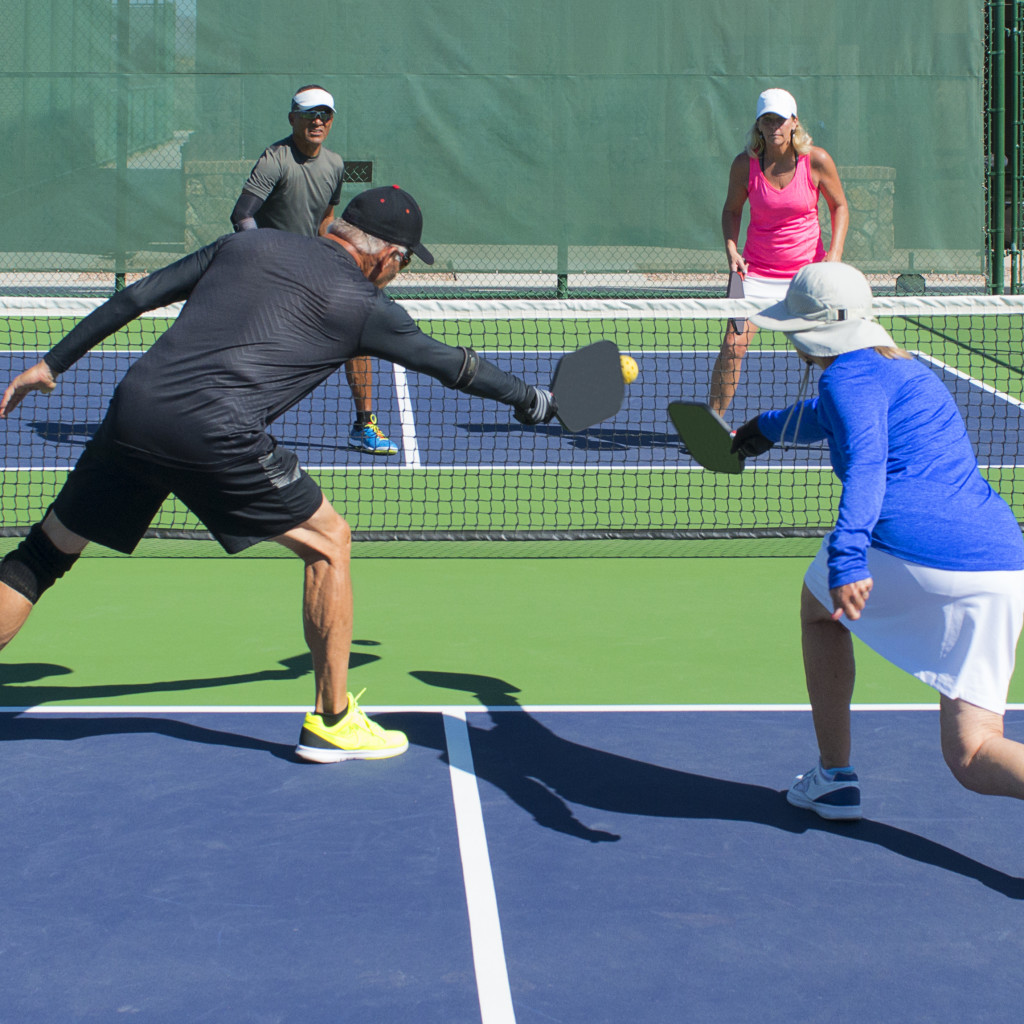
Pickleball has exploded onto the scene in recent years. It is easy to see why this game has become so popular. It’s relatively easy to learn and play, can be played in smaller, more versatile spaces, and is VERY socially engaging, and it. This differs from tennis which takes time to learn and develop proper technique, requires larger spaces in order to be played, and is less socially engaging (due, in part, to the larger court size).
According to the Sports and Fitness Industry Association (SIFA) Pickleball has grown 158% in the past three years. Despite its overwhelming popularity, what do we truly know about the risk of injury associated with pickleball? Is it really a safer alternative to tennis? While it is true that pickleball is considered a great form of low impact exercise, its recent and sudden rise in popularity means that limited extensive research exists in regards to specific injuries related to pickleball.
Played with a much lighter ball and paddle and requiring far less distance to cover than tennis, many tennis players believe they can’t get injured with pickleball. However, it might surprise you that the data thus far shows something different. In one study The National Electronic Injury Surveillance System (NEISS) conducted a review of recreational PB injuries from 2013-2017. What they found was that although pickleball is “lower impact” than tennis, they both shared similarities as it relates to injuries. 90% of all injuries were seen in players 50 years of age or older and 32% of the injuries affected the lower body followed by ~25% injuries of the upper body. One major difference is that shoulder injuries are greatly reduced in pickleball. The serve and overhead motion involved in tennis can place a lot of stress on the shoulder especially if the technique is poor. Naturally, this is going to lead to some injuries. In pickleball, however, the underhand nature of the serve limits any overhead stress on the shoulder joint.
Nevertheless, upper extremity injuries can still occur with pickleball! Overuse injuries of the elbow and wrist, for example, are found at much higher rates than they are with tennis.
Similar to tennis and other racket sports, your hips, knees and ankles are susceptible to strains and sprains. The NEISS did find that senior men (age 50 or older) were three times more likely to sustain a strain or sprain injury compared to their female counterparts. These strains and sprains commonly included the hamstrings (back of the thigh), the quadriceps (front of your thigh) or the calf muscles
Additionally, it’s been found that falling is fairly common in pickleball largely occurring from pivoting after getting to a shot. Falls can result in injury to any part of the body, upper and lower extremities included. More importantly, however, injuries that result from falling are usually much more severe in nature than simply a muscle strain or overuse injury. Fractured bones and joint dislocations are not uncommon after a fall.
Regardless of the sport you play, the majority of all injuries are due to overuse or excessive volume. This means that the body is not equipped to handle the load that is being placed through it. It is for this reason that we recommend exercise and conditioning outside of the court. A proper strength and conditioning program is vital in preparing the body to handle these loads and preventing breakdown from occurring.
Tips to Prevent Injuries:
- Incorporate variety into your workout training by including other sports such as cycling, walking, swimming. Cross train!
- A balanced fitness program should involve both strengthening and stretching.
- Having good preparation is key! Dynamic warm ups and cool downs are necessary for success.
- Focus on technique and skill for optimal performance.
- Recovery is as important as training. Get proper rests between practices, training and competition.
- Recognize signs of an injury and seek advice promptly.
- Maintain proper nutrition, hydration and sleep.
- Wear proper footwear when you are playing.
REMEMBER Don’t play your sport to be fit. Be fit to play your sport!