2024 Coaches Roundtable

The local tennis community boasts some of the top coaches in the world, and with this wealth of talent available, New York Tennis Magazine took the opportunity to pick the brains of some of these coaches. These coaches share their thoughts on a wide variety of tennis topics and issues, ranging from junior tennis to the professional game.
 Gilad Bloom is a former Israeli Davis Cup player and two-time Olympian, played on the ATP Tour 1983-1995, reached the fourth round of the U.S. Open in 1990, reached a highest ranking of 61 in singles, was Israel Singles Champion three times. Bloom has been running his own tennis program since 2000 and also was director of tennis at John McEnroe Tennis Academy for two years.
 Vinicius Carmo is the Director of Tennis at the Ross School Tennis Center. A former standout player from Brazil, Carmo attended the University of Tennessee on a full tennis scholarship, before moving on to direct several prestigious tennis programs in the Hamptons before going to RSTC. Carmo has expanded the program to include events, competitive training techniques and more, using his NCAA experience and extensive connections to help RSTC graduates in the next stage of their tennis careers.
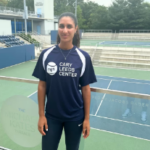 Yesica De Lucas is the Director of Junior Programming at The Cary Leeds Center for Tennis & Learning. De Lucas has previously coached at the Rafa Nadal Academy in Spain, and recently completed an outstanding career competing for the St. John’s Tennis Team.
 Ion Efrim is the Senior Assistant Director, Camp Director, On-Site Tournament Director for Sportime Randall’s Island and the John McEnroe Tennis Academy (JMTA). Originally from Romania, Efrom was a top-ranked junior in his home country, as well as the European Champion in the Boys’ 14s Division. As a senior at Alabama State University, he was named Player of the Year and MVP of the SWAC Conference Tournament, as well as Student-Athlete of the Year at ASU. Ion spent three summers at the SPORTIME/JMTA during college, before joining the team full-time as a tennis coach and the site’s Tournament Director in 2020.
 Dale Evans is the Director of Tennis Operations at the Billie Jean King National Tennis Center. Originally from Oakland, CA, he is a 2-time tennis industry national award winner and 2- time national coaching champion who has spoken at several conferences and USPTA World Conferences. After playing collegiate tennis at Jackson State University (MS), he has spent an extensive amount of time coaching players and leading high-performing teams throughout the tennis industry. He holds a B.S. in Management and M.S. in Sports Management and certifications from USPTA, PTR, Academia De Sanchez-Casal, and IPTPA.
 Magnus Gunnarsson is the Junior Program Director of Roosevelt Island Racquet Club, part of Advantage Tennis Clubs. A native of Iceland, Gunnarsson was an excellent junior player, competing across Europe and representing his nation at the age of 18 in Davis Cup play. He began his coaching career in Iceland before moving to New York City and joining the Advantage Tennis Clubs team.
 Tony Huber is the Head Professional & Adult Program Director for Advantage Tennis Clubs in New York City. Prior to coming to Advantage Tennis Clubs, Tony was the Director of High Performance at the Cary Leeds Tennis Center in The Bronx. Tony is a PTR Certified Professional and started his coaching career in 1993, at Van der Meer Tennis on Hilton Head Island. His accomplishments include coaching Liezel Huber to #1 in the world(doubles) for 199 weeks, as well as numerous other top players during his 15 years on the WTA Tour. He coached in two Olympic Games (Sydney and London) and developed many top juniors who earned college tennis scholarships.
 Steve Kaplan is the owner and managing director of Bethpage Park Tennis Center, as well as director emeritus of Lacoste Academy for New York City Parks Foundation, executive director and founder of Serve & Return Inc and co-director of The City Classic Junior Tennis Academy. Steve has coached more than 1,100 nationally- ranked junior players, 16 New York State high school champions, two NCAA Division 1 Singles Champions, and numerous highly-ranked touring professionals. In 2017, Steve was awarded the Hy Zausner Lifetime Achievement Award by the USTA.
 Ed Krass coached the Harvard Women’s Tennis Team to four consecutive Ivy League titles from 1986-1990. Ed is the founder and director of the Annual College Tennis Exposure Camps, which are taught exclusively by all head college coaches for high school-aged players (15-18). Ed is also the founder of One-On-One Doubles tournaments, which have been played at USTA, ATP, ITA and USPTA national events.
 Chris Lewit is a former number one for Cornell and pro circuit player. He is a high- performance coach, educator, and the author of two best-selling books: The Secrets of Spanish Tennis and The Tennis Technique Bible. He has coached numerous top 10 nationally- ranked players and is known for his expertise in building the foundations of young prodigies. Chris coaches in NYC and year-round at his high performance tennis academy in Manchester, VT, where players can live and train the Spanish Way full- time or short-term.
 Omar Lopez is a full- time tennis professional at Future Stars in Southampton during the winter and the Assistant Tennis Director at Future Stars Southampton in the summer.
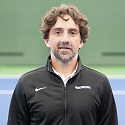 Ognen Nikolovski is the general manager of CourtSense and director of tennis at Bogota Racquet Club. He is a former top junior from Yugoslavia who went on to play college tennis at Rollins College where he became an all-American. He went on to become a world-ranked singles and doubles player on the ATP Tour and was a captain of the Macedonia Davis Cup team. He joined CourtSense in 2008 where his passion and experience has become instrumental in developing the program.
 Danny Ostrometsky is the Director of the 10U program at MatchPoint NYC in Brooklyn. A USPTR Certified Coach, he is a former Top 30 player in the Eastern Section in both the 16s and 18s category, before playing collegiately at George Washington University.
 Conrad Singh is the CEO at Centercourt Tennis Academy in New Jersey. He has recruited and developed a team of coaches who have produced two junior Wimbledon finalists and one champion, as well as countless athletes competing at the highest college levels. Singh is a renowned Biomechanist with degrees in Sports Science and Education. As a Grand Slam Master Coach at over 50 Grand Slams, he has a passion for Elite Player Development. Singh is a former National Coach that is heavily involved in Coach Education and holds Elite credentials from Australia, Europe and USA. He is a regular Keynote Speaker at Global Coaches Conferences and currently has multiple Touring Professionals which he is Specialist Coach and Advisor to.
Mental health is an important topic that has been brought to the forefront of athletics recently. How often and how do you engage your players on their mental well-being, both on and off the court?
De Lucas: Every day, I ask my players how their day went at the beginning of class and then I pay close attention to their behavior during practice. Sometimes, players may be going through something they don’t verbalize, so observing their body language and mood is essential. Even young players, who often seem carefree, are forming ideas about themselves and others that may influence their future mental health, so creating an atmosphere of respect, teamwork, and support every day is crucial. I like reminding them that I’m here to listen if anything, whether on or off the court, is making them feel sad, frustrated, or overwhelmed.
Krass: Mental health is always a top priority. Since I run a two day College Tennis Exposure Camp, I do not get the privilege of knowing everyone’s current state of mental health; However, I do think it is of utmost importance to put our players into a learning and training atmosphere fostered with love, respect and enthusiasm for them as people FIRST!
Lewit: Player welfare and mental health is paramount. When you get to know a player well, you can feel if they are struggling with something that may be bigger than just tennis. That’s a daily assessment. In those cases, I will try to work with the parents to assess what we can do to help the player or seek help from a professional mental health provider. I believe parents know best, and I always look to the parents for insight and guidance on my student’s mental health.
Nikolovski: At CourtSense we have a mental strength coach whose services are part of our High Performance program on a weekly basis. We are strong believers that mental health is just as important an aspect of every athlete’s life as any physical or technical component, and it is key that each athlete works on this on a daily basis, similar to how they would work on their serve or footwork. Our players are taught from a young age to follow certain rituals while playing, but also before and after playing, and in reality most of these mental techniques could be= applied to their daily life, in school or at other activities.
Ostrometsky: I speak regularly about mental health with the players in our programs, as well as those players who I work with personally. During camps, or longer practices, we meditate and learn to be mindful about what kind of energy were carrying. Journaling is something I’ve found incredibly useful both for myself and for the students who are willing to commit a few minutes each day to the practice. Whether it’s journaling about their most recent tennis tournament, or the practice they just had, or something that’s happened in their lives, writing can be super helpful in venting, working out complicated emotions, easing anxiety, and problem solving. We practice breathing techniques and coping strategies that players can use to regulate their emotions on court.
Gamesmanship and cheating are always controversial topics at the junior level. How do we begin to try and eliminate those sorts of things from the game?
De Lucas: We need to emphasize good behavior and fair play not only during competitions but also at practice. When someone cheats during practice you should call them out and talk to them separately, without necessarily punishing them. Ask them if they would like to be on the other side, discuss the potential ramifications of inappropriate behavior during competitions, and maybe let them be the referee of a practice match.
Efrim: There should be more educational opportunities for players and parents, whether in the form of webinars or live conversations with former pros or high level coaches. It becomes engrained in many juniors to be obsessed with winning, and unfortunately with that, comes a lot of blatant cheating. If kids learned the importance of gamesmanship along with being exposed to how they can and should react to cheating, there would be less, and it would be dealt with more efficiently. We should consider more severe suspensions for juniors who are repeat offenders of cheating.
Gunnarsson: To eliminate gamesmanship and cheating in junior tennis, it’s essential to teach sportsmanship from the very beginning. Group lessons on rules and respect can foster a better understanding among kids, and parents should be educated to lead with the example of respect. It’s also important for young players to understand that losing is a natural part of the game and a valuable life lesson.
What do you find most rewarding about being a tennis coach?
Bloom: For me the most rewarding aspect of coaching is the personal relationship that I develop with the students. As a junior coach I get the privilege to watch the kids grow as players and humans and to be a part of their development and to contribute to their life, there is no greater satisfaction for a teacher. I enjoy the process of developing the kids through the daily routine and it is extra satisfying when they end up fulfilling their goals and do well on and off the court. When they end up doing well in college or on the tour, I remember where they started and what a long way we went through together from the early days.
Carmo: The most rewarding to me is the fact that I can have an impact on people’s lives. It can be physically or mentally. I love when I see a difference in someone’s motivation about the sport or life. Of course I want the players who I coach to win and I am super competitive, but it is more rewarding when I see them learning about themselves and making small daily improvements or big ones that they will carry for the rest of their lives.
De Lucas: Seeing players build confidence and believe in themselves is incredibly rewarding. In Junior Development, success varies for each child: for some, it might mean simply getting their serve over the net, while for others, it’s winning their first tournament. Regardless of the achievement, it’s fulfilling to witness how something they achieved on the court makes them feel strong, self-assured, and happy. Knowing that this confidence extends beyond the tennis court into their lives is what makes coaching so meaningful to me.
Gunnarsson: The most rewarding part of being a tennis coach is having a positive impact on someone’s life, helping them gain experiences beyond the sport itself. Tennis teaches critical life lessons, like working with others, overcoming challenges, and pushing through tough moments, which students can carry into real-world situations. The goal is not just skill development but learning how to face difficulties both on and off the court. Seeing players apply these lessons to life is incredibly fulfilling.
Lopez: The most rewarding part of being a tennis coach is seeing players improve and grow, both on and off the court. Watching them develop their skills, gain confidence, and overcome challenges is very fulfilling. Additionally, the relationships built and the positive impact on people’s lives is something very unique. I have had the pleasure of meeting some amazing people throughout my years as a coach, both as coworkers and students, and it’s very gratifying to see years later how far they’ve come and to know I was part of their journey.
What is something you think you can improve on as a coach?
Evans: As tennis coaches, we have all honed our skills as being great in delivering tennis to many ages and levels. With the game continuing to grow, I believe there are two areas that we can improve on to help reach our USTA goal of “35 by 35”, which is a target of 35 million players in the U.S. by 2035. Those areas are in diverse communication – we can always improve our N.Y.C. community marketing and on-court delivery when working with different demographics, and coach development–we can always help the next generation of tennis providers build sound tennis knowledge which will help our players improve that much more.
Gunnarsson: Coaching is a constant journey of improvement, as every player requires a different approach. One area I focus on is adapting my coaching style to meet each individual’s needs, ensuring they grow both as players and as people. Tailoring lessons to suit their unique strengths and challenges has always been a priority for me. A key question I continue to explore is how to effectively motivate players, whether there’s a universal method or if it’s always a highly personalized process.
Singh: As a coach for over three decades, I am always seeking opportunities to learn and to attend conferences, seminars and also to present where needed. My biggest area of challenge these days is to remain up to speed on Technological, Innovative and new ways of coaching and or adding value to the Tennis Development of the athletes I work with.
What advice would you give a former player who has desires to go into coaching?
Carmo: My advice is that they need to like working with people and have the will to help others. Being a coach can be as frustrating as being a tennis player. The difference is that you can teach your students from the mistakes that you made and learned from them.
Krass: My advice to players wanting to enter the coaching profession is to choose the right one or two mentors who are very successful in their tennis niches. Try to study, over the course of a year, what they do, how they do it and how they respond to people and any problems that arise. It’s important to read coaching books, as well. Becoming a certified coach will add knowledge and credibility.
Singh: Do the hard yards and treat this the same as you would your own development as a former player. It takes years and hours of dedicated training to become an elite tennis player, just as it does to be a professional coach. Take every opportunity to learn, be mentored and to attend Training and Official Coach Education programs. Playing well absolutely does not determine being a great coach and on-court teacher. I have met more great coaches that don’t play at a high level than I have great players who immediately translate to great coaches, but playing well certainly gives you a great head start. Also use your best skills to connect and win the respect of your players.
How do you feel about students who question you?
Efrim: It is frustrating when it happens, but it is par for the course. I don’t get upset because I feel disrespected or insulted, but because I know that down the road, they will understand where their coach was coming from. My goal and hope is always to strengthen my relationship with my players, both on and off the court, so they believe in the work we are doing together. The more a player trusts their coach, the better the journey and tennis career will end up being down the line.
Lewit: Questions are usually good. As a coach it’s important to listen to your player and be attentive to concerns. Sincere questions give me a lot of insight into what the player is concerned about and what he or she needs to hear. Questions help guide the pathway forward. In general, I don’t think coaches should shut down the lines of communication by discouraging questions. If a player is asking questions to be snarky, rude, or to interfere with training, that’s a different situation entirely.
Nikolovski: Every time a student questions a coach I look at it as an opportunity to learn and also strengthen the relationship with the student. In reality if a player is questioning the coach, and it is coming from a good place, it means that the player is engaged, and simply needs further clarification or a different approach from the coach. As a coach I have understood a long time ago that every player/student is different, and as a coach you always have to be willing to adapt and simply learn from the player, which does not necessarily mean that the coach has to change his/hers principles, but simply look into other ways to present them. Ultimately it is all about the student/player, and whenever they question something, we have to take it with the utmost respect.
Do you see any trends in technique used by the top players that you now use in your teaching? Or any tendencies from today’s stars that you see junior players using?
Bloom: As a coach I always look to the young stars on the tour for new trends, the game is constantly evolving and every new champion brings something unique that you can learn from. The current “big 2”, Sinner and Alcaraz, are dominating the game and there is certainly a lot to learn from their technique and style. Sinner’s consistency and agility on the court and his ability to control the baseline rallies by taking time away from the opponent is something that I try to teach my students. Alcaraz possesses a different style altogether and plays an all court style, he mixes up the styles, he can play from the baseline and defend when necessary but he likes to come in a lot and basically tries to sneak at any opportunity. There is much to learn from the top players and naturally I always look at the ones on the top of the ranking for examples of how to maximize your talent.
Kaplan: The most current trend is the distinction and use of what has been termed the ATP, WTA and NEXT GEN forehands. Some coaches advocate that some of these styles are superior to others and they may be correct…. or they may not. As they are unproven I think that teaching such a style would be first an experiment and further not a most efficient or effective use or progression of our lesson time. My focus is on what I believe are universal fundamentals that include, balance, movement synchronization, movement efficiency, movement effectiveness, reactivity, tracking, ball receptive skills, spacing , rhythm, tempo, timing power, power endurance, and high percentage body, racket positioning and ball placement to help develop tactical, and strategic problem solving abilities.
Lewit: Absolutely. I just finished my new book Winning Pretty, which features cutting-edge technique and biomechanics. The technical game has changed dramatically in the past few decades. I can give a long list of answers, but four examples are the ATP-type forehands and backhands are standard on the men’s tour and the percentage of women using this type of short range of motion, whippy technique is rising quickly; open stance backhands and. two-handed backhands have become almost universal on both tours, and drop shots and swinging topspin volleys are now used routinely to attack. Alcaraz has inspired a generation of kids to work on their drop shot now!
In what way has the milder climate in recent years in NY affected the landscape of the local tennis business? Do you see any tendency toward people staying outside to play more? Any change to programming/camps/etc?
Carmo: After Covid, people got used to playing outside longer in the fall and earlier in the spring. The myth that going indoors as soon as the temperature drops is necessary has changed and affected how people play tennis in New York. I do see more clubs waiting longer to install their bubble and other clubs offering fall programs outdoors.
Evans: The milder climate has increased the window of outdoor tennis, therefore allowing many facilities to be creative in this new space for the time being. Noticeable trends are players playing outdoors later into the year and venturing outdoors earlier. Here at the National Tennis Center, we’ve welcomed the opportunity to run camps indoors and outdoors, along with creating memorable experiences when teaching outdoor clinics on our stadium courts.
Huber: It’s been pretty cool to see how the nicer weather we’ve been getting in New York lately has changed the game for local tennis. Seriously, it feels like everyone’s itching to stay outside and hit the courts as much as they can, way past summer and into what used to be the time we’d all pack up and head indoors. And it’s not just about more folks playing casually. Clubs and coaches are getting super creative with what they offer. This shift’s been awesome for players wanting to soak up every bit of court time under the sky and great for the business side of things too, keeping the courts full and the community buzzing.
Kaplan: A milder climate as well as the pandemic have contributed to the trend for many players to extend their outdoor play for as long as they are able. I believe that the industry is well advised to respect and accommodate this trend with flexible programs . I can understand that this may be costly in the short run for some clubs and programs . However tennis is a service business and seen as a luxury by many. Our willingness to be adaptable to a changing climate, changing demographics, changing health concerns and changing market preferences is going to be good for the sport and in the long run help the industry do well.
How do you think pickleball has affected the local tennis landscape both positively and negatively?
Efrim: I initially thought pickleball would have a negative effect on tennis. I do think that was the case for a short period of time, but at the end of the day, they are quite different sports. I think tennis and pickleball can coexist and benefit from one another to get people excited about both games and racket sports in general. I have played a few times in the last year now that we have dedicated pickleball courts at the academy, but I still maintain that tennis is number one!
Kaplan: Pickleball is a natural progression for the aging population of the sport and it provides a low cost and low commitment alternative for many tennis clubs to fill otherwise unused court time . While some in the industry see tennis participation as a zero sum with Pickleball converts taking players away from tennis, I see this differently. Pickleball is in many ways the “quickstart” of mature participants with adapted rules, equipment and modified court. If embraced by tennis enthusiasts and managed well, pickleball can add to the use of courts and the enjoyment of racket sports.
Singh: I am a believer that we are similar to snowboarders and skiers who need the same or similar resources but can co-exist very well. For me pickleball is not a substitute sport to choose one or the other. But to mix into your week and for kids to develop other skills. I think Pickleball is a very good thing and eventually will be in College Sports. Padel is another sport we need to embrace. People being active, playing racquet sports and socializing is a very good thing on many levels.
What does having the world’s biggest tennis event (The U.S. Open) being held here in New York do for tennis locally? What benefits do you see?
De Lucas: It is very important for kids to see that the players that they see on TV are real people just like them. Some of the kids from our NYJTL Scholar-Athlete Program got to meet and play tennis with Coco Gauff and Billie Jean King during the 2024 U.S. Open, and that really inspired them. The proximity of such a major event also gives families easy access to world-class matches and experiences, which can ignite kids’ passion for the sport. It encourages them to dream about their own potential and believing they could one day compete at that level can be a powerful motivator.
Huber: Having the U.S. Open right here in New York is like hitting the jackpot for the local tennis scene. It’s not just about having a front-row seat to the biggest tennis party on the planet; it’s about what it does for us here on the ground. There’s the boost it gives to all the local tennis businesses and coaches. You’ve got more people wanting to learn, play, and get better, hoping maybe they’ll play on those courts one day. It’s good for business, sure, but it also means more opportunities for everyone to get involved in the sport. And let’s not forget the community vibe it brings. Whether you’re watching the matches, hitting the local courts more, or just feeling proud to be part of the New York tennis scene, it’s a time when tennis isn’t just a sport; it’s a celebration.
Lopez: In my time in New York, I’ve noticed that kids often participate in multiple sports simultaneously. Many sports have professional games almost every week, allowing young players and fans to watch professionals regularly, which draws their interest and attention. Tennis, however, is different and doesn’t offer such frequent opportunities. Having the U.S. Open in New York significantly benefits tennis locally by increasing the sport’s visibility and inspiring new players. It creates excitement around the game, encouraging more people, especially young athletes, to take it up. The event also supports local tennis programs, clubs, and businesses while attracting global attention to the city’s tennis culture.
Nikolovski: The U.S. Open definitely has a tremendously positive impact on our immediate tri-state area, and just the energy that is created around the event the few weeks before and also during the event in the tennis world is very positive for tennis in general, and then with all the exposure in the media, TV and also for the people that are able to attend the event, it simply breathes life into our sport. I sincerely wish that the event itself could be more accessible for the general public as the reality is that it has become a little too expensive to attend for a normal family, however there is no question that during the three weeks of the event, and this includes the week of qualifying, it is tough for anyone not be exposed to at least some tennis, which hopefully translates to more people falling in love with our great sport.
Singh: It is obvious that kids see and want to play, which for me leads to more players entering the participation pipeline. It is then OUR job as coaches to inspire and get these new players to fall in love with the sport. Our area is so fortunate to have this incredible opportunity and we need to make sure we get all players young and old to experience the energy and excitement that saturates the city. Americans doing so well is also a great thing, this is the ultimate role model situation with the players being so close. Don’t miss the chance to expose your players, kids, adults and anyone else in your club. It’s also a great date on the calendar to build a community within your academies.
What impact do you think the success of the American men at this year’s U.S. Open will have on tennis popularity here in the States?
Bloom: It was certainly exciting for American tennis to have Tiafoe and Fritz go so deep, it can give the young aspiring Americans who are trying to become pros hope that it is possible for this country to produce a major champion. There is certainly a buzz and a positive feeling about US tennis, however in the grand scheme of things nationally, tennis is and was still in the same place it always have been: somewhere in the second tier of popular sports. It would take a special champion to change this reality, someone with the personality of a Connors, McEnroe or Agassi to make any impact or to change the status of the game, someone who can attract fans who don’t normally watch tennis.
Huber: The American guys shining at this year’s U.S. Open is huge for tennis back home. Seeing our own players tear it up on such a big stage pumps everyone up, making more folks, especially kids, want to grab a racket and hit the courts. When American players do well, especially at home, it gets more eyes on the sport. That means more coverage on TV, more social media hype, and more conversations around water coolers. All this attention translates into more people wanting to play, watch, and get involved in tennis in some way. Success like this can lead to better funding for tennis programs, nicer courts in the neighborhood, and maybe even more tennis events throughout the year. It’s all about building a stronger tennis community.
Lopez: The success of American men at this year’s U.S. Open will likely boost tennis popularity in the U.S. It gives young players relatable role models and inspires them to pursue the sport, showing that Americans can succeed on the global stage. This achievement can increase interest in tennis, drawing more fans, media attention, and participation in local tennis programs. It could also create a resurgence in support for the sport, fueling growth at both the grassroots and professional levels across the country.
Ostrometsky: My hope is that the success of both male and female American players will increase the popularity of the sport in the states. It’s awesome having such a massive global event take place in our city, helping to showcase our best players, as well as providing a chance to American wildcards, standout juniors and collegiate players, but I don’t believe the players’ nationality has as much to do with the popularity of the sport so much as the relatability and marketability of the players themselves. Tennis needs to be interesting, engaging and most importantly cool in order for kids to want to play. The more American personalities in the sport, the better I think it would be for its growth in America.
The U.S. Open raised ticket prices across the board this year, but also saw a record number of people attend the event. What do you think this indicates about tennis’ standing comparatively to other sports?
Efrim: Tennis is booming, especially with so many Americans being successful on tour following full collegiate tennis careers. People are excited about that and it brings some hype to the American turf. The fans want to see the budding rivalry between Alcaraz and Sinner, which reminds them of the Nadal vs. Federer rivalry. They are the future of tennis, and people are here for it, which brings so much incredible and much needed attention to the game.
Evans: Simply stated, this indicates our popularity is growing. In my opinion, tennis is most captivating when multiple generations can share in the love of the game and many of the current up and coming American stars are products of this in various ways. Take for example Ben Shelton and Sebastian Korda, who both have former ATP fathers and combine that with Jessica Pegula who has the Buffalo Bills faithful behind her. All these factors, along with tennis adding 9.7 years to your life potentially, contribute better emotional connections to what is recognized as the most popular individual sport in the world.
Kaplan: The growing demand for U.S Open tickets says a lot about USTA’s skill in marketing this event as the place to be. Many, like myself, remember the time when the ticket prices were lower, the crowds were not crushing and you felt like you were attending an event to watch tennis rather than go shopping and take a picture to post on Instagram. I can’t blame the USTA for going the route of income maximization however, and I think that moving toward sports entertainment can be enriching. I do hope that the tournament solves its crowd management issues. Some of the crowd bottlenecks are inconvenient at best, and a stampede in the making at worst.
Krass: It seems like there has been a huge surge of interest in tennis once again! I think the U.S. Open is the top sports and entertainment event in the world–with sellout crowds and folks attending from all over the world. Tennis is certainly one of our world’s top sports to play and watch!
Ostrometsky: It was nice to have seen so many people at the Open this year despite the rising prices. Some very hectic days, but I suppose record attendance reflects the fact that the US Open is a must- see event, and therefore gets a lot of eyeballs on the tennis itself. Tennis’ main obstacle, in my opinion, is that training is often very expensive and in the Northeast, court time comes at a premium, whereas team sports like football, basketball, and soccer are much more accessible and easier to get into to begin with. It’s reassuring to see a Grand Slam event get such crowds and be in such high demand with the fans, but I think there is a long way to go for an individual sport like tennis to be as popular as the major team sports, particularly in America.
Would junior tennis benefit from having more team events and tournaments like other sports? Do you think the isolation/individualism of tennis can deter young players from playing?
Carmo: I believe that all children under 10 years old should only compete in team events in tennis. I do think that the isolation/individualism of tennis makes kids choose other sports. Tennis associations all over the world should work very hard to offer more team competitions. USTA has offered some team competitions and it is great for juniors. The environment is always much lighter and you see kids laughing and having fun.
Nikolovski: Junior team events are simply a must have. There is no question in my mind that most of the players enjoy them, which makes it easier on the coaches and parents to be part of it. Obviously tennis for the most part is an individual sport, and at the end of the day one of the best attributes of junior tennis is that the players learn from very young age to deal with problem solving on their own, and this can be challenging at times as some juniors at a young age are still not ready for it. However, when the individual match is part of a team competition, and it really counts for the overall score of the team, in most cases juniors are willing to dig a little deeper, as they can feel the support of their teammates or simply feel the responsibility to give a little extra effort. Also, from a fun perspective, juniors love the social aspect of being on a team which simply attaches them more to the sport.
Ostrometsky: I think there are pros and cons to tennis being an individual sport. There are definitely kids who thrive without the pressure of letting their teammates down and on the flip side, players who have a hard time being out there on the court by themselves. Ultimately, the nature of the sport is pretty lonely and regardless of playing on a team or not, athletes are alone with their actions on the court during a match. I love the incorporation of team events in the Junior schedule throughout the year. Kids can’t wait to participate and the team events are a highlight of the year for many juniors I work with. I think if there were more professional team events that were taken more seriously, like the Davis Cup used to be, perhaps with ranking points and standings on the line, it would be great for the sport globally.