
The Training Ground for Resilience in Junior Tennis
At the National Tennis Center during the U.S. Open, the spotlight shines on the professionals who rigorously fight for every match on our screens and are put into an environment that is not only physically demanding, but the effortless ability to bounce back from adversity.
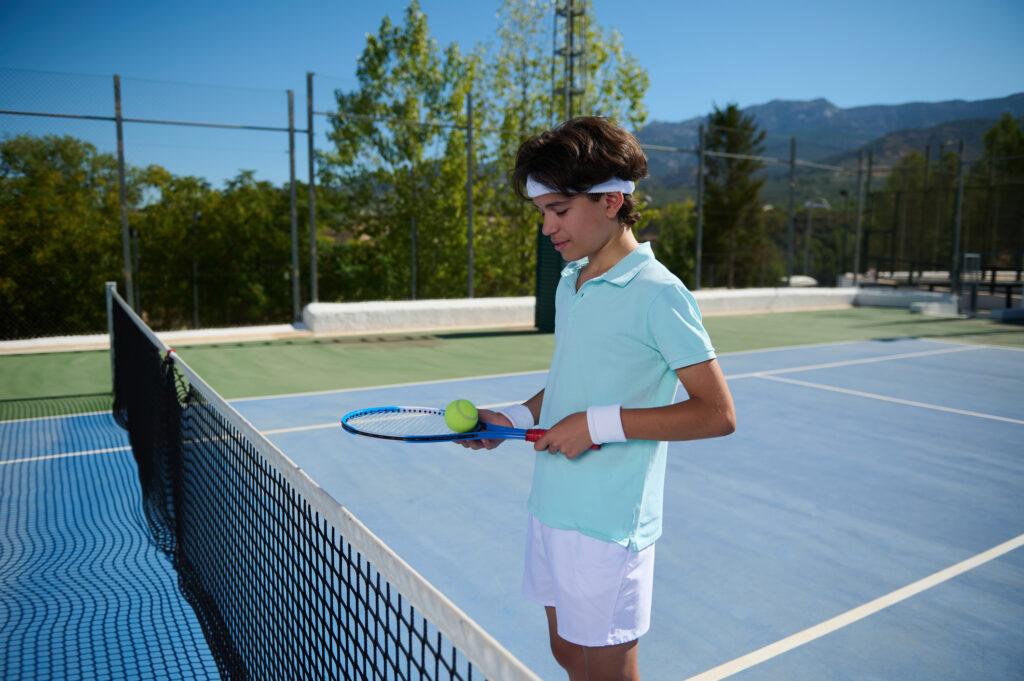
The true training ground for this resilience dates back to the junior circuits and intermediate levels within each USTA section. This period tests the physical and mental toughness and proves ground for ambitious athletes that will challenge their limits and spirit in the competitive nature.
Below is an effective pathway to establishing the habits of a young, aspiring tennis player, both on and off the court:
Early Influence for Mental Fortitude
Every competitive player creates a winner, an error, a strategic decision, a ritual, a game plan – the stress for it all to work out in their favor is carried on the backs of these individuals. The isolation that these players are feeling come from these stable blocks:
responsibility + accountability = mental toughness.
Coaches support and assist in developmental stages, as well as regulate emotions and professionalism on the court. Not only are they responsible for progression of strokes, but teaching how to have a positive mindset in the face of defeat. These players start to develop defense mechanisms in close matches, for example coming from behind wins, and heartbreaking losses. The lessons that create these future competitive scenarios is where we channel the emotional database: “Lock in” to that trigger, and respond in real time.
Building Competitive Toughness
How do coaches determine the improvements to be made on court? Simple: “open, close, open” method. On the front end, our junior programs at the National Tennis Center support analyzing player needs in an open play-based environment via matchplay analysis. The middle phase uses hard practice drills and scenarios when they are young to help cultivate a mentally tough player. This represents the closed environment which builds junior confidence and competitive familiarity for all levels. On the backend, staff should work to help juniors solve these questions and guide them back into competitive play, including:
→Are you running down every ball?
→How resilient are you in every drill?
→How frustrated do you get if you miss 9/10 shots? Or do you get right back to it fast?
→How fast do you put the ball back in play after the last shot ended?
→And many more depending on player levels from Junior Circuit to L1!
As parents, you may recognize the behaviors as spectators at tournaments. You may not see the drills being done behind the scenes so it’s a challenge trying to manage their kids emotions when really you can’t control them once they are competing on that tennis stage.
Modernizing Junior Development
Scenario Training: Coaches simulate real time challenges by preparing the players with high pressure situational points
Mindful and Visuals: Techniques to combat stress, maintain focus levels, and manage the voice in your head to rehearse positive and successful outcomes
Goal Setting: Players are encouraged to set goals that are realistic and achievable
Self Reflection: Visualizing their performance mentally and learning from both the victories and losses
Effort & Attitude: Sliding the focus from winning to all the effort utilized and the attitude shown on display
Roger Federer once said. “As a tennis player, you have to get used to losing each week. Unless you win the tournament, you always go home a loser. But you have to take the positive out of a defeat and go back to work. Improve to fail better.”
Let’s break that down into segments. On a macro scale, losing each week means you are playing loads of practice sets and maybe a tournament or two which can be up to three matches a day. No matter what format the players are competing in, there is a win/loss metric to account for. But the micro aspect, each match consists of points per game.
There are many factors in junior tennis that could affect how long the rallies are, how long a match could go for, never ending super tiebreakers, etc. There is no time limit for these matches; it is not like a basketball game when the buzzer calls for time. These players have to be ready for battle, the highs and lows, and the rollercoaster of physical demands as well as emotional distraught. Imagine being really happy about winning a point, then the next point completely hitting the ball straight into the net. To endure such happy/relief moments to then turn into a frustrating defeatist space, competitive players will have to learn how to level out all these emotions as well as stay on track.
Tennis is an entertaining sport and job. The pros: You get to do what you love and the attention is the spotlight. The cons: the physical and mental labor given in each shot wears you down. The best fix is to get used to losing more than half the points you play. It’s how fast you bounce back, it’s how you carry yourself, and most importantly how you portray yourself after the match regardless of your match results. A sport of highs and lows: tough losses, but having a resilient gene; is a very crucial skill in life that many tennis players will learn to develop in each stage.