Goal Setting: How to Plan Your Success?
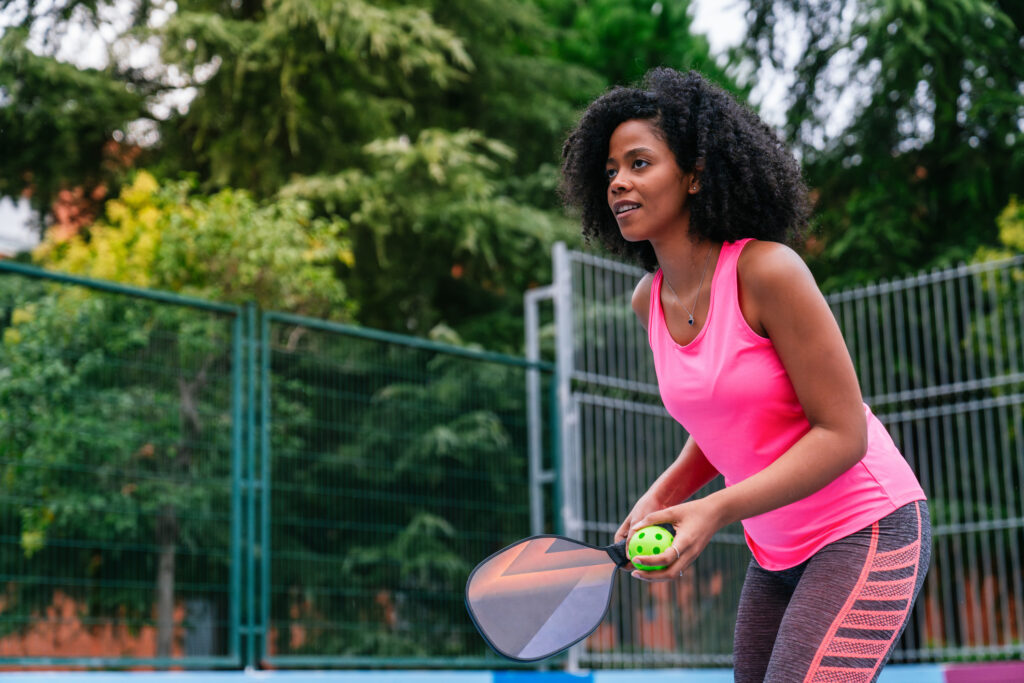
Goal setting is a great tool for aspiring pickleball players to implement during their development. Goals help the player stay committed, determined and focused. They should be challenging, individualized, and motivated by intrinsic factors that are meaningful to the player. Additionally, goals should also be specific and time-bound, so the player knows exactly what they are trying to accomplish and by when. I suggest writing down goals and keeping them in a visible place and/or sharing them with others. Doing so will help the player keep their goals at the forefront of their mind.
There are two types of goals: outcome goals and process goals. Both important but different. It’s imperative to understand the distinction between the two types. Outcome goals focus solely on the end result, while process goals focus on the steps a player must take to give them the best chance to achieve their outcome goal. For example, an outcome goal might be to win a tournament, while a process goal could be to improve serving accuracy, third shot drops, or stay calm and centered between points. Outcome goals, which are result based, are out of a player’s control. It should be stated up front, that we all want to win, but wanting to win (outcome goal) and doing the things that are necessary to win (process goals) are two different things. Focus needs to be on what is necessary to give yourself the best chance to win, not the end result of winning itself. This is where process goals come into play. They focus on specific areas of the game that the player can practice and can control such as how they prepare, how they drill, how they warm up, what shots they choose, what strategy they use, and how they react to situations in games.
An important aspect of goal setting is objectively determining where a player is in relation to their goals, essentially knowing “where they are.” This realistic perspective will help the player understand “what they need to do” and the appropriate process goals necessary to practice to give them the best chance to achieve their goals. The most common mistake players make is focusing solely on outcome goals, such as winning. This can result in subpar, poor, and frustrated outcomes because their focus is split between what they want to happen in the future and what is actually happening in the moment, their focus is divided.
Instead of focusing on winning, which is something that cannot be controlled, a player needs to focus on playing each shot with a clear intention, in the moment, during the point. An example of this could be hitting deep returns to the middle and moving to the kitchen. Hitting shots with intention helps players maintain their focus on the process, stay fully engaged in the moment, and control what they can control.
It is recommended that players set an outcome goal and then determine the process goals that will best help them reach the outcomes. An outcome goal is like standing at the bottom of a staircase and only staring at the top step, this can be overwhelming, wondering how to get to the top. However, a process goal involves taking one step at a time. By breaking a larger goal into smaller, achievable steps, you can make progress and achieve your ultimate goal. Remember: to reach the top, you must start with the first step, followed by the next step. That’s the process!
Outcome goals are static whereas process goals are flexible and can be adapted, adjusted and modified at any time.
For example, let’s consider this situation of outcome and process goals: I, the author (Rob Polishook,) once lost in a tournament. Clearly, the outcome goal of winning was not met! However, upon reflection, I identified a key weakness: my inconsistency in hitting resets from the transition zone and the kitchen. Since then, I have been dedicating 20 minutes per practice to practicing reset volleys from different court locations. Think about it, this type of intentional practice is no different than a basketball player practicing their jump shots from different locations on the court.
As Dr. Alan Goldberg, a noted mental training coach, says, “Once the competition starts, the outcome goal should be parked at the gate and the player should focus on the moment and the process of what they need to accomplish.” Research has confirmed that achieving process goals not only enhances performance but also reduces anxiety and builds confidence. This is because process goals are within the pickleball player’s control.
Here are three examples of process-driven goals in Pickleball:
- Incorporate specific strength training or movement exercises three times per week into your workout routine to increase balance and stamina.
- Practice hitting ten serves to each of the three different targets (down the T, body, and out wide) on each side of the court three times per week.
- Practice hitting 10 reset volleys from the kitchen five times per week. Then, move back to the transition zone and repeat the process.