Junior Player Spotlight: Mariia Vainshtein, NYJTL Cary Leeds Center for Tennis & Learning
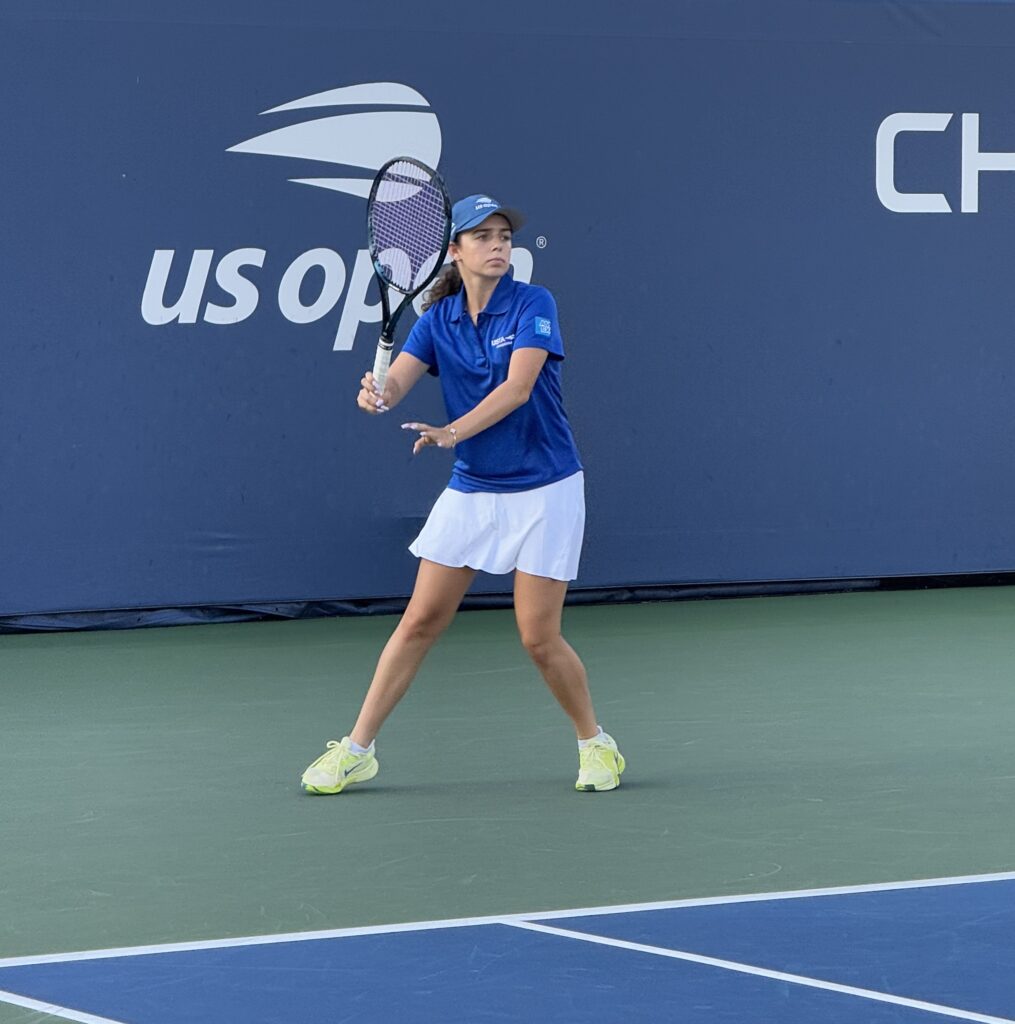
The beauty of tennis is that it holds a lot more importance and can have a greater impact than just forehands and backhands, and wins and losses. Being a tennis player allows one to become part of a community with people of shared interests, and oftentimes bridges gaps.
For Mariia Vainshtein, moving from war-torn Ukraine to New York a few years ago, she found solace on the tennis court, and with her fellow tennis players.
“It was hard to adjust at first,” Vainshtein recalls. “I didn’t know a lot of English, I did learn some in Ukraine, but it was hard to find friends, hard to speak with teachers or coaches, but somehow I managed to learn a little bit. And playing tennis with many different types of people, from different cultures, helped me a lot. Everyone on court was so nice and welcoming, and playing tennis really helped me adjust.”
Vainshtein is now a senior at James Madison High School in Brooklyn, and has been training at the NYJTL Cary Leeds Center for Tennis & Learning in the Bronx as a part of the NYJTL Scholar Athlete Program for the past year. While she didn’t speak much English upon arriving in the States, she speaks the language very well now, and has become one of the better players in all of New York City.
This past year alone she has racked up many accolades. Vainshtein led her James Madison team to the PSAL 2A New York City Championship in her junior season, while also winning the PSAL Individual Singles title.
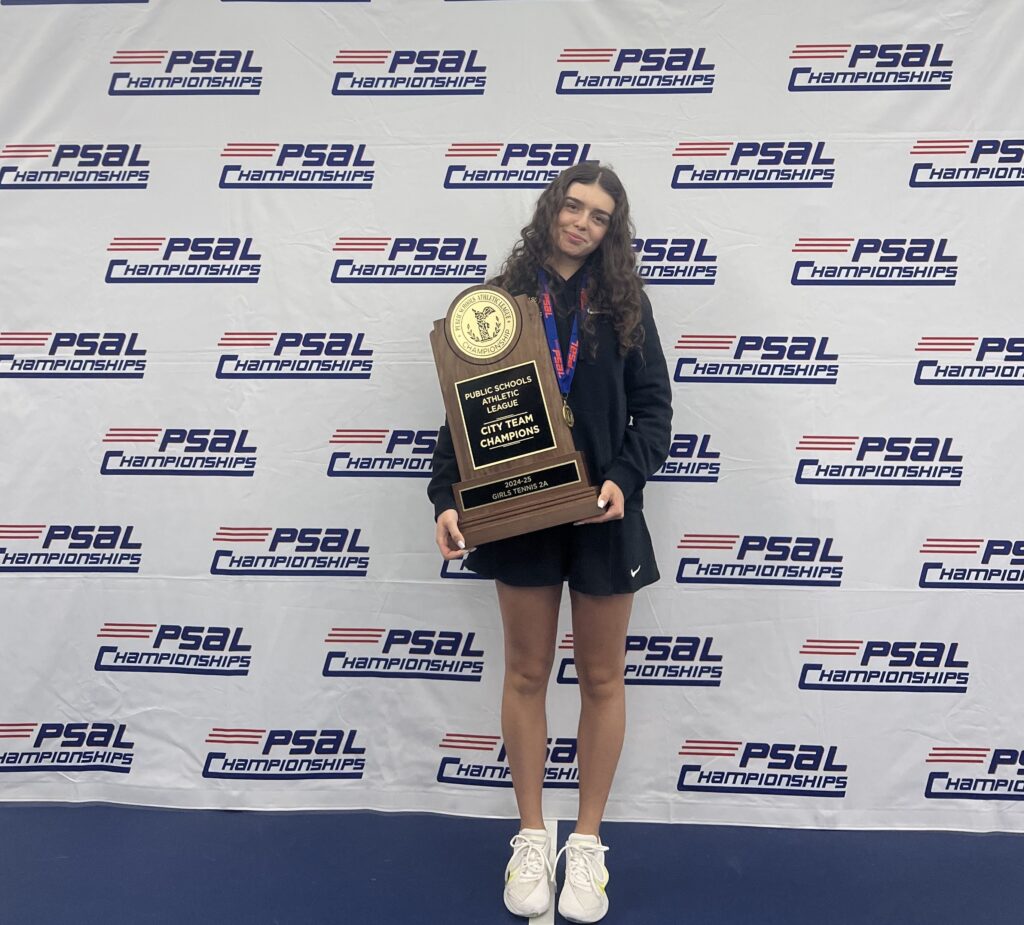
In the spring, she captured both the singles and girls’ doubles titles at the NYJTL Mayor Dinkins Cup, performing well on her home courts at the NYJTL Cary Leeds Center for Tennis & Learning.
“The team title is what meant the most to me because we put in a lot of work together. We supported each other throughout the season, and had such team spirit, so it was rewarding to come together and win that,” she said. “The individual titles were great in a different way because a lot of the girls I played against, I had actually lost to at least once during the regular season, so it was really nice to beat them. Playing on the Cary Leeds court was amazing, all the coaches from there and all the players I train with were there supporting me. That really helped motivate me.”
Vainshtein’s tennis journey began back in Ukraine, when her doctor told her parents that she had poor eyesight and should try to do an activity that helped improve that. Being able to follow the ball in tennis seemed like the ideal mechanism to solve this, and so when she was five-years-old, she hit the courts for the first time.
A few years later, she was playing more competitively and entered various junior tournaments. But when Russia invaded Ukraine back in 2022, her father decided it was best if her and her mother left the country. They landed in Brooklyn, and in the shadow of MatchPoint NYC, where she was able to join a community of many Ukrainians, which helped with the initial assimilation process.
“It was really helpful for me to be around people who spoke the same language, who come from the same culture,” Vainshtein recalls. “But at the same time, it also sort of stopped my progress of learning English, because everyone there spoke Ukrainian or Russian, and I didn’t have to speak English that often.”
She then transitioned to training at the NYJTL Cary Leeds Center for Tennis & Learning, which she says has really helped her grow not just as a tennis player, but also as a person. Vainshtein continued to learn the language and become more comfortable with who she was, not to mention growing as a tennis player.
“They put in a lot of work during my practices, and help me train for and travel with me to tournaments as well,” said Vainshtein. “Off the court, we have mentoring lessons and how to improve the mental side of my game. I have just been able to learn a lot of lessons that have helped me on court and in school, but also just in life in general.”
Those lessons have proved to be essential for Vainshtein’s tennis. “If I start losing, sometimes I crash out, which is not good. I need to work on that,” she says with a smile. “The Cary Leeds Center for Tennis & Learning helps me a lot with that, and we work on things that help me stay calm while remaining competitive. It can get a little ugly when I get mad, so understanding how to deal with those things is something I am definitely working on.”
The full name of the facility is the NYJTL Cary Leeds Center for Tennis & Learning, and it’s the last word of that, “learning”, that holds major significance for Vainshtein. She approaches her academics with the same vigor she does her tennis, and wants to major in political science when she goes to college next year, before attending law school to become a lawyer.
“Playing college tennis would be really nice, and I am interested in doing that. If that happens, I’d be very grateful,” she said. “But if not, I still have my career path to become a lawyer, which is what I am really excited to pursue.”
With so much on her plate, from her high school tennis and junior tennis schedule, in addition to the amount of time she spends on her schooling, Vainshtein is a busy girl. To decompress from the stresses of tennis and school, she loves to spend her free time driving in her car, where she says she is able to unwind and clear her head.
“Sometimes I just go for drives by myself. Some of my friends say I’m a bad driver, but it’s not true, I’m a very good driver,” she says jokingly.
It’s been three years since Vainshtein fled Ukraine for New York, and the notion of war continuing in her home country is something she still thinks about every day, especially when her father travels back there often. But she has been able to carve out her own path here in New York City, and is looking forward to what comes next.