
Keep the Fun in the Game
Using motivational psychology to improve tennis play
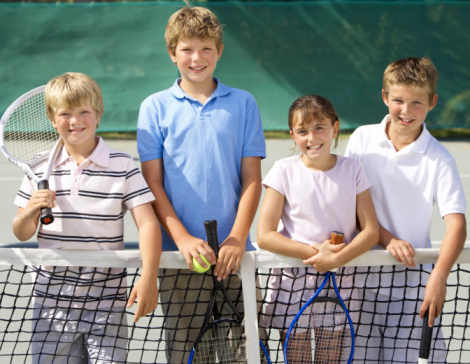
If you are serious about any sport or activity, you’re going to have to work long and hard to get to the level you want to reach. Very often, the activity that was fun when you started can become more like a grind as your practice gets more intense.
It doesn’t have to be this way. Specifically with tennis, surrounding yourself with the right people and practicing in the right environment can motivate you to improve your game and keep you enjoying the sport. Sometimes training centers and instructors need to use motivational techniques to keep the game fun—while still giving students something to strive for, even when they might feel burnt out.
Here are a few techniques instructors may rely on to help improve your game.
Systems progression
Systems progression is based on grouping students according to their skill levels (novice, intermediate, advanced and expert). By doing this, instructors are able to coach students at exactly the right level. As students progress, they are moved up to the more advanced groups. This system keeps students motivated and focused on improving their game. Think about it … if your friends move up to a more "advanced" level and you’re still in the "intermediate" group, you will likely feel left out and work harder to play at the same level as your peers.
This technique is used successfully at Advantage All City, with an addition—students wear color-coded wristbands to signify their skill level. These color levels group students based on skill set, physical conditioning and mental state. Instructors work to motivate students and set goals for them to achieve, including specific requirements for moving up in color rankings. The program is ideal for adolescents, as pre-teens often feel the need to belong and be part of a group.
Incentives
As students perform well and progress, they are rewarded accordingly. Just as when you perform well at your job and your boss rewards you with a bonus, tennis players also respond to incentives for good work. For instance, instructors may make students use smaller racquets when their skills are less developed. The small racquets leave less room for error, but help hone accuracy. As a student improves, the instructor can increase the racquet size so there’s more room for error and more skill is required. Gradually increasing the racquet size will likely make a student perform better, so the larger racquet is an incentive for improvement.
Setting goals
Setting specific short- and long-term goals are determined based on the improvements you wish to make over a given time span. Arguably the most important type of motivation, setting goals is a direct challenge to boost your skills by a certain amount within a certain time.
Motivational environments
Working with a coach and/or teaching facility that creates a positive atmosphere. Motivation starts with the setting. If your goal is to lose weight, for example, you’re going to surround yourself with fresh, healthful foods. If you’re looking to improve at tennis, you’re going to look for a coach and/or instructional facility that enables success. This can be as simple as posting inspirational quotes around a practice area. More advanced methods might include a library of tennis instruction books or as staff that focuses on positive reinforcement techniques.
Tennis is a game and games are supposed to be fun. With the right motivational psychology methods from both an instructor and a training institution, students will always view tennis in a positive light while reaching their developmental goals. Great skills, a love of the game, no burnout … who could ask for more!