
Mastering Court Coverage
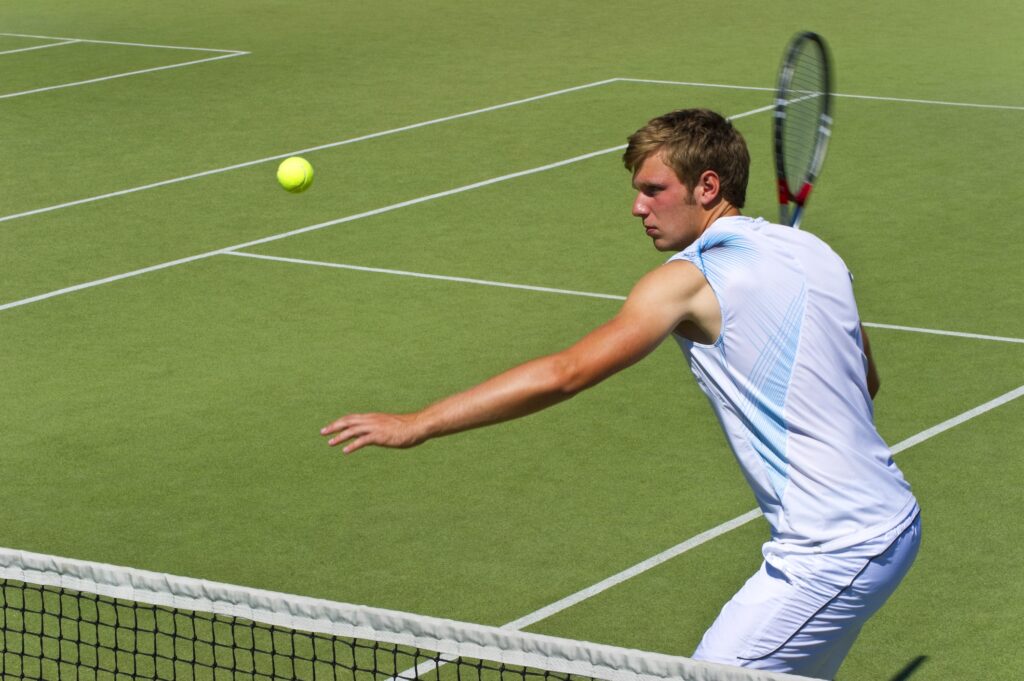
What do Roger Federer, Pete Sampras, Rafael Nadal, Andre Agassi and Novak Djokovic all have in common besides a plethora of Grand Slam titles? They were all fantastic movers! Movement has always been the key to being a great tennis player. As rackets and strings allow us to hit the ball harder and heavier, we find ourselves with increasingly less time to react and set up. And while not all of us are as quick, powerful or nimble as the aforementioned greats whom have played this game, we still have to find a way to move to the ball.
I know that many of us were taught to side-shuffle and take as many steps as possible to get set up to the ball, but that just doesn’t fly anymore. The ball is coming so fast these days, many players have adopted and learned how to hit open-stance forehands and backhands. And while I know that there are a great number of articles and demonstrations on how to hit these shots, very few of them actually teach you how to move efficiently to get there.
So … how do we get more range on the court? How can we cover half a court in less than two seconds? How do we ensure that we will be in position to hit the ball effectively and balanced? The simple answer … Walk to the ball. Yes, you heard me right, walk to the ball. And the best part of this is that you should only need three steps to cover half a court. If you don’t believe me, go out on a court stand on the singles hash mark and push off your left leg so that your right leg takes the first step. Then, take two more big steps with your toes always parallel with the baseline, swing your racket and see if the tip of your racket is across the singles side line. I know I can usually get midway to the alley with this, but used to have more range when I was playing.
The reason I always encourage people to move like this is because when you are constantly taking smaller steps, your head is always moving and it becomes more difficult for your eyes to adjust to the ball. The second reason I encourage people to do this is because you always end up with your outside foot anchored to the court, which allows you to either hit an open-stance shot or transition your weight from your outside foot into the shot. Either way, your weight remains evenly distributed or moving forward.
One of my favorite drills to learn this is to have a friend or instructor stand on the other side of the court at the service line and hit a relatively high arching ball at 10 miles per hour out toward one side of the court and see if you can time your movement to get there in only three steps. The goal here is to see if you can develop a rhythm and balance moving to the ball. The key is to wait and see where the ball is going to bounce, as this will determine whether you have to move forward or backward from the baseline as well. Try this for a few days and I guarantee you will notice a difference in your balance and ability to recover and hit a more effective shot.