The Next Generation of American Juniors
LI’s Noah Rubin earns singles and doubles wild card spots in 2014 U.S. Open main draw

Long Island’s own Noah Rubin was in his third semifinal at the USTA Boys National Championships in the 18-year old division. The first two times, he fell short, failing to reach the final. Up 5-1 in the third set of a grinding battle against the 11th ranked junior player in the world, Michael Mmoh, Rubin was on the verge of breaking his curse. In the blink of an eye, that 5-1 lead came apart and the scoreboard read 5-5. A double break lead had slipped away … a plot twist, to say the least.
Scratching and clawing for every point, as he has become known for, Rubin fought back to defeat Mmoh and move on to the finals.
A finals appearance in Kalamazoo guarantees a spot in the US Open Qualifying Tournament, a win in Kalamazoo, however, earns a wild card entry into the U.S. Open main draw.
After being awarded a wild card into last year’s qualifying tournament, it is safe to say that Rubin did not go back to Kalamazoo, Mich. to do it again. He wanted to earn his shot in the main draw of the U.S. Open.
Facing Collin Altamirano of Yuba City, Calif., the defending champion at the tournament and a feisty competitor at that, the native New Yorker had himself a challenge. Yet, with timely spot-serving, patient baseline play and pure speed, Rubin found himself playing very solid tennis.
In the first set, just like in the semis, Noah was up a double break. Again, it looked like it might disappear after losing one of the breaks. However, this time, the Wake Forest-bound freshman reversed the script, serving it out to grab a one-set lead.
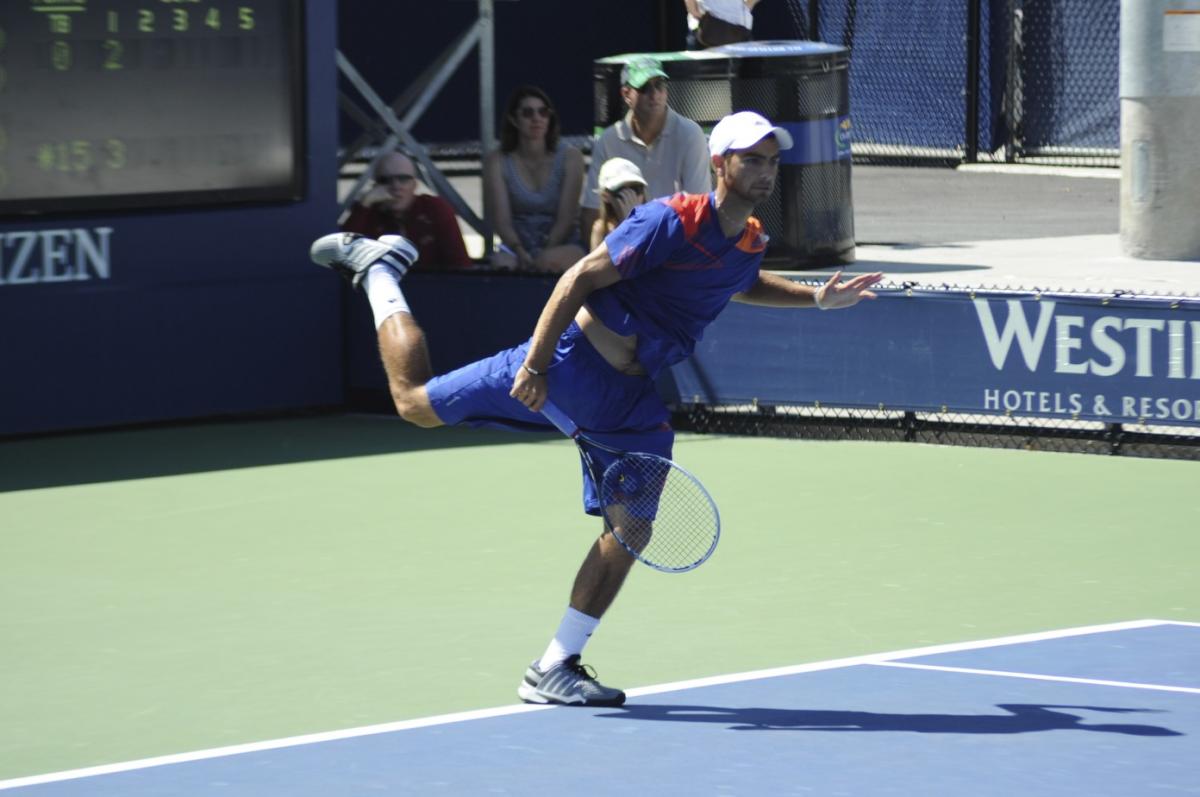 Second set? Pretty much exactly the same. Another double break lead for Rubin was nearly erased before he calmly held his second chance for the set at love with an impressive serving display to put himself on the verge of one of the biggest wins of his life.
Early on in the third, Rubin looked like he could run away with it. He broke Altamirano and consolidated it to lead 2-0, frustrating the defending champion to no end. Rubin is the one better known for his fiery attitude on the court, yet the University of Virginia-bound Altamirano was chastising himself at every twist and turn.
There had to be another shift in momentum, as Altamirano got his mental game together long enough to take his first lead in a set since 1-0 in the opener, grabbing a 3-2 third set lead. Once again, Rubin stayed calm to hold and grab the break back again. Yet another set, another chance to hold out for the victory.
The very next game, Rubin faced 0-40, three break points for his opponent to throw a wrench into his plans. However, this time, Rubin played extremely solid baseline tennis, hanging on in rallies which, at points, favored Altamirano. He would hold and break to win the best-of-five set match for the main draw wild card into the U.S. Open. Noah Rubin was the winner of the USTA National Championships, 6-4, 6-4, 6-3.
He also won the doubles title with partner Stefan Kozlov, earning another wild card into the main draw of the Open. Noah will be duking it out with the very best in the world in two draws, with the possibility of getting drawn against the likes of Novak Djokovic, Roger Federer and the Bryan Brothers.
In early July, Rubin defeated who would eventually be his doubles partner, Stefan Kozlov, in three tough sets that lasted over two hours 6-4, 4-6, 6-3 to win the Boys Junior Wimbledon Championship. Rubin came to Wimbledon having played just one other junior event this season, the Junior French Open, as he had been playing Challengers and Futures. Due to the lack of junior tournaments this year, he was forced to qualify to earn a spot in the main draw of the Wimbledon Juniors. He took the challenge and breezed through qualifiers and then battled through the main draw en-route to eight total victories and the 2014 Junior Wimbledon Championship.
The Boys Wimbledon Final marked only the second-ever all-American boys’ final at Wimbledon and the first since 1977 when Van Winnitsky defeated Eliot Teltscher, with Rubin becoming the first American to win the title since 2007 when Donald Young hoisted the championship. Three of the junior boys semifinalists at Wimbledon were American, including 16-year-old Taylor Fritz of Rancho Santa Fe, Calif.—the first such occurrence at a Grand Slam since the 2000 U.S. Open when Andy Roddick, Robby Ginepri and Ytai Abougzir were all in the final three.
For now, the Wake Forest-bound Rubin is in the focus of the spotlight as he heads to play at Flushing Meadows, but recent outbursts of the red, white and blue show that there are plenty of youngsters fighting their way to the top of the game to join the likes of John Isner and the recent crop of Americans currently on the ATP Pro Tour.
People question the state of American tennis, especially on the boys side, and soon slowly but surely, Noah Rubin and the emerging crop of American juniors will show that they have what it takes to change skeptics’ minds.
In addition to Noah, here are a few other American juniors to watch out for:
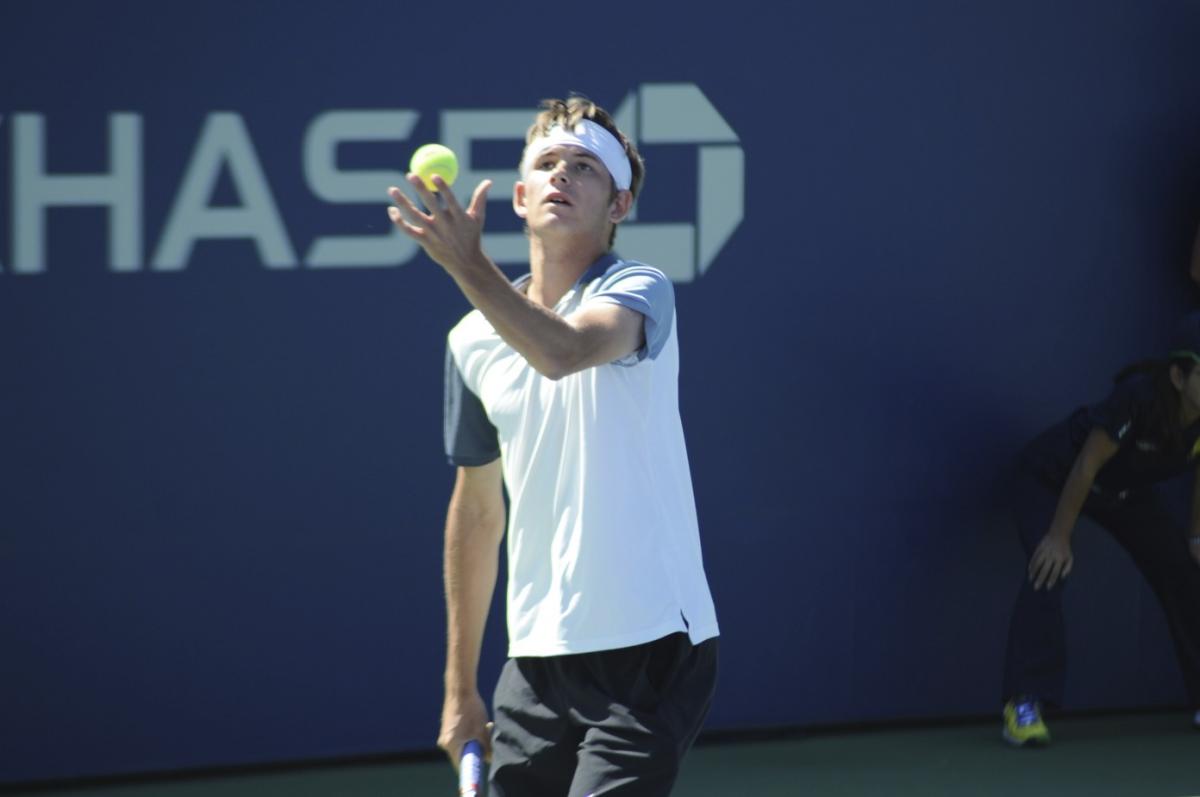 Jared Donaldson, the Kalamazoo finalist from a year ago has been on fewer radars than any other up-and-comer, yet he has the most physically mature game of any American. After suffering a pretty humbling loss in the final of the 18-year old National Championships in Michigan, which provides a wild card into the main draw of the U.S. Open for the champion and qualifying for the runner-up, Donaldson had a chance to show fans at Flushing Meadows who he is. Would he be the mentally fragile talent that he showed at Kalamazoo, or the mature tennis player that professionals aspire to be? Playing Farrukh Dustov, a physically imposing opponent to have to face in the first major tournament of Donaldson’s career, he passed with flying colors. He got a taste of what his career will consist of, guys that hit a bigger ball than juniors do, with more spin, location and depth. Donaldson impressed with his consistency, hitting a pretty heavy ball for his age, forcing Dustov into errors. Now what will translate best to the next level was the change of direction Donaldson showed. Players in the top-50 in the world even have a stroke that they aren’t willing to take to different areas of the court, yet Donaldson exudes a confidence in yanking the ball side to side, line to line whenever he wants. If one wanted to search YouTube videos of the youngster, they’d see that he quite frequently disengages cross court rallies to change direction, helping him open up the court. Perhaps one of the more important qualities of a player in today’s age is their serve. In an era in which so many giants rely on tiebreakers, it is important to have a holdable serve, especially after the first fault. Second serve points won is one of the more reliable storytellers of a match. Whoever takes a higher percentage of those points consistently wins the match, and Donaldson has a clean and efficient motion, allowing him to keep opponents off of the offensive, at least for the first shot of the rally. His biggest issue moving forward will be his mental game. Against Dustov, he showed tremendous positive emotion, keeping himself together in a three set war. On other occasions, he will nitpick every shot he hits. Does Nadal complain about every shanked forehand? A mental game is arguably more important than any physical trait, and if Donaldson can pull a 180-degree turn in that department, something that many of today’s stars had to do at his age, he can be the next big thing in American tennis. Too many guys go out there without the fire needed to win battles on the court. At least he has it, Donaldson just needs to tame it.
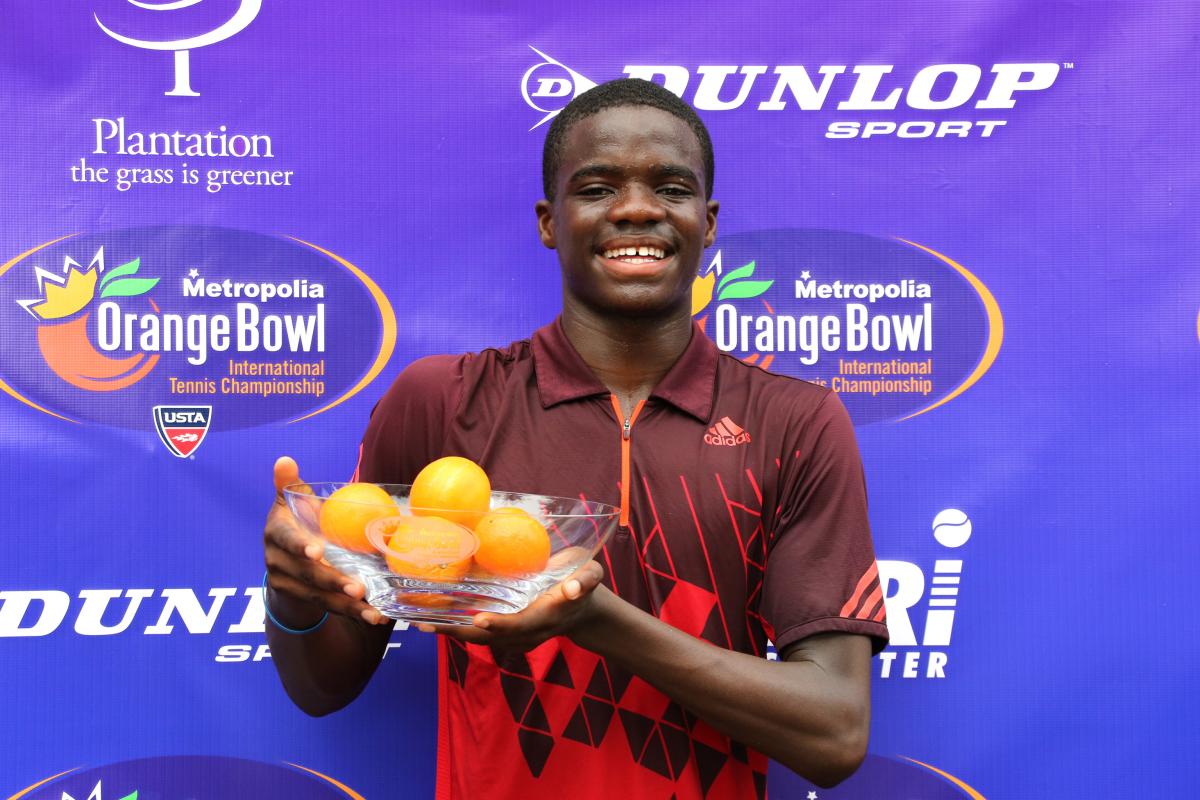 At the Citi Open in Washington, D.C., Francis Tiafoe made his ATP World Tour debut against a solid, under-ranked player in Russian Evgeny Donskoy. Donskoy will end up gaining notoriety as a wily veteran that is solid from the baseline and capable of causing trouble with his groundstrokes, albeit without the big frame usually needed to do so. Bottom line: Not the easiest first big-time match for the 16-year-old. Many will look at the final scoreline of 4 and 4 and see a routine match. In reality, it wasn’t, and the American had a lapse of concentration in each set that let him down. For the rest of the match, it is not out of the realm of reason to claim that he was the better player. Tiafoe has a ridiculous forehand, with racket head speed eerily close to that of the present “next big thing,” Jack Sock. Tiafoe’s ball is slightly flatter, with a bit less height over the net, which causes him to take the ball behind the baseline, when in reality taking it early would be absolutely deadly. It is not crazy to say that if he gives the ball a bit more shape so that he can get it a tad deeper that he will have a top-20 forehand. Now, many will look at the shot and say that it isn’t conventional, with a very “torque-y” swing that as mentioned uses a lot of acceleration and arm. A lot of coaches may want to see a smooth motion like Roger Federer, but more and more guys are having success with a whippy motion. Even in America alone, Sock, Sam Querrey, Bradley Klahn, Steve Johnson and even to an extent, Rhyne Williams, all have very whippy forehands. They’re all playing Grand Slams, so they have to be doing something right. The only thing that may hold Tiafoe back is his serve. With pure athletic ability he hits it and hits it hard, but it is really inefficient, and can become much bigger than it already is. His shoulder turn is nonexistent, which is really the second place power comes from after the lower body pushes off the court. Furthermore, a lack of shoulder turn inhibits repeatability, as the toss being off just a slight bit would throw the whole plane of the serve off. Tiafoe is young, and everything is correctable, but this would improve his game greatly.
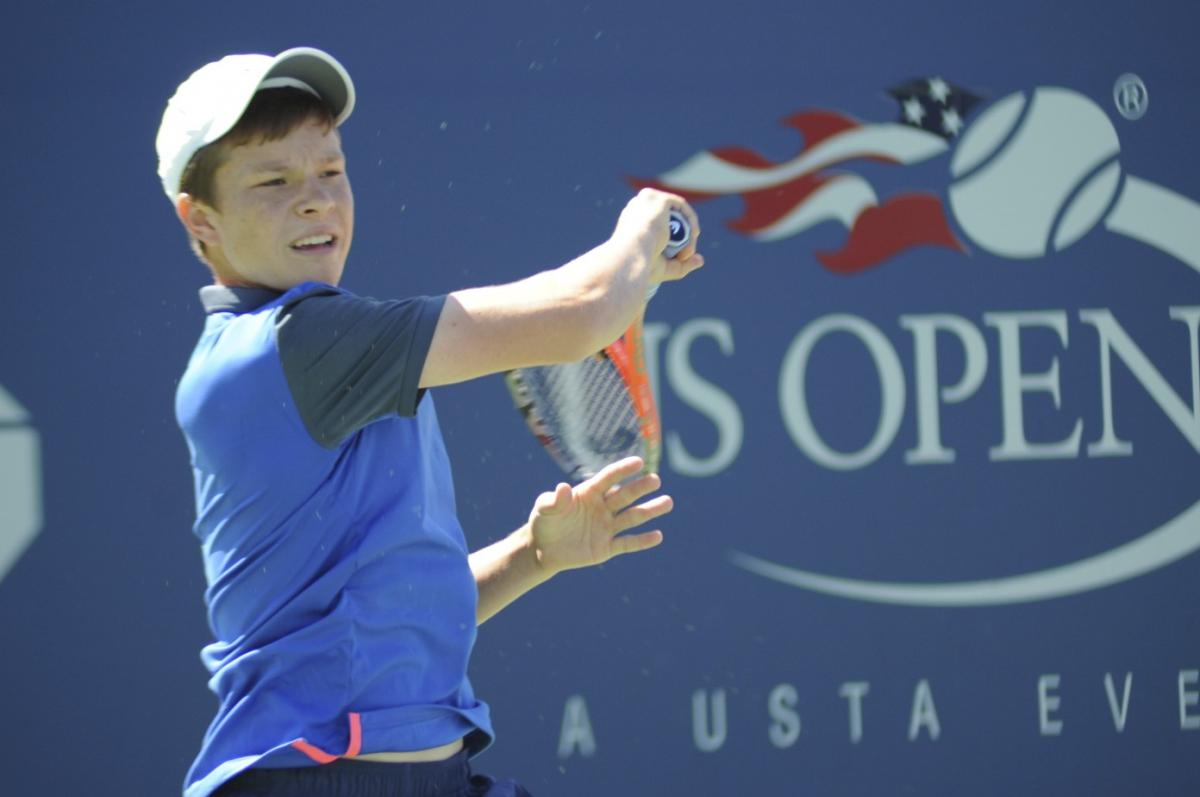 Now, it is hard to continue without acknowledging the other young rising stars in our country that have a bright future in this game, but the most complete player, in my opinion, is Stefan Kozlov. Although Stefan is the youngest of this American bunch, he already has the most sound groundstroke game technique-wise. Keeping in mind he hasn’t developed an outstanding shot as of yet, like everything in the game of tennis, new things develop with age. One of those just happens to be explosiveness and power. Already known as a kid that hits an extremely heavy ball for his age, Kozlov, the constant practice partner for pros will eventually have just a little more pace and spin on his ball. At the “big boy” level, this translates to depth and jump onto the opponent. Right now, a big thing for Kozlov will be how his frame develops. If he grows, or works himself into a bigger frame, his ground game could very possibly be the best of any American on tour now, once he really gets into his career. His service motion will also greatly help him as the years tick on, as with the free-swinging, smooth motion that he has, Kozlov will only get more and more pop. Looking at the resumé of a lot of the top juniors, they all have won a big title. Tiafoe won the Orange Bowl, while Noah Rubin just won Wimbledon. Look at Kozlov, and he has had to settle with deep runs at the Slams. No question, those are great accomplishments, but he must be bummed to an extent to have not broken through. Come the U.S. Open, if he makes a run, gets a huge win or anything of the sort, look out for Stefan Kozlov.