
Surf & Turf

Professional tennis players say that playing a different sport improves their performance. Rafael Nadal believes golf and fishing allow him to relax after the stresses of a tennis tournament. His argument is perfectly logical: Outside sports let athletes hone their native skills, escape their frustrations with a mental reset, and move in new ways, encouraging muscle growth and repair. The components of tennis are frequently compared to those of other sports: The serve to a baseball pitch, the forehand swing to a golf drive, or the mental strategy to a chess-player’s pondering. But one sport which shares a striking number of similarities with tennis, both mentally and mechanically, is often overlooked.
Although tennis may seem more mechanically aligned with other sports, its mental requirements most closely resemble those of surfing. Both on the court and on the waves, these athletes face the same two opponents: the conditions and themselves. Tennis and surfing, a land-based racket sport and a water-based balance sport, may initially appear to occupy opposite extremes of the sporting spectrum, but a closer examination suggests otherwise.
A surfer begins by paddling out atop his surfboard into the calm waters. He looks around, listens to the ocean, absorbs the sun and enjoys the moment. But this calm did not bring him to the beach–the waves, their challenges, and the adrenaline they provide lured him here and keep him coming back. Although these factors can throw him off his board to tumble violently beneath the waves, they also establish the conditions that lead him back to tranquility: Calm waters follow each tumultuous wave. If he can ride his board through this moment’s test, he can take advantage of the tranquil seas following and confidently anticipate the next wave.
A tennis player’s match begins as he rests peacefully in the locker room, waiting to hear his name called from the cue which summons him from the clubhouse into the quiet of the tennis courts to begin warm ups. As the match commences, everything might seem to be going perfectly: Ideal conditions, all shots firing, a comfortable lead, and a perfect mental state. But just as with surfers to the ocean, the calm is not what brings great tennis players to the court. Instead, the challenges of finding your game, overcoming bad conditions, accepting bad calls, or just conquering frayed nerves are each the “waves” that get a tennis player’s adrenaline surging.
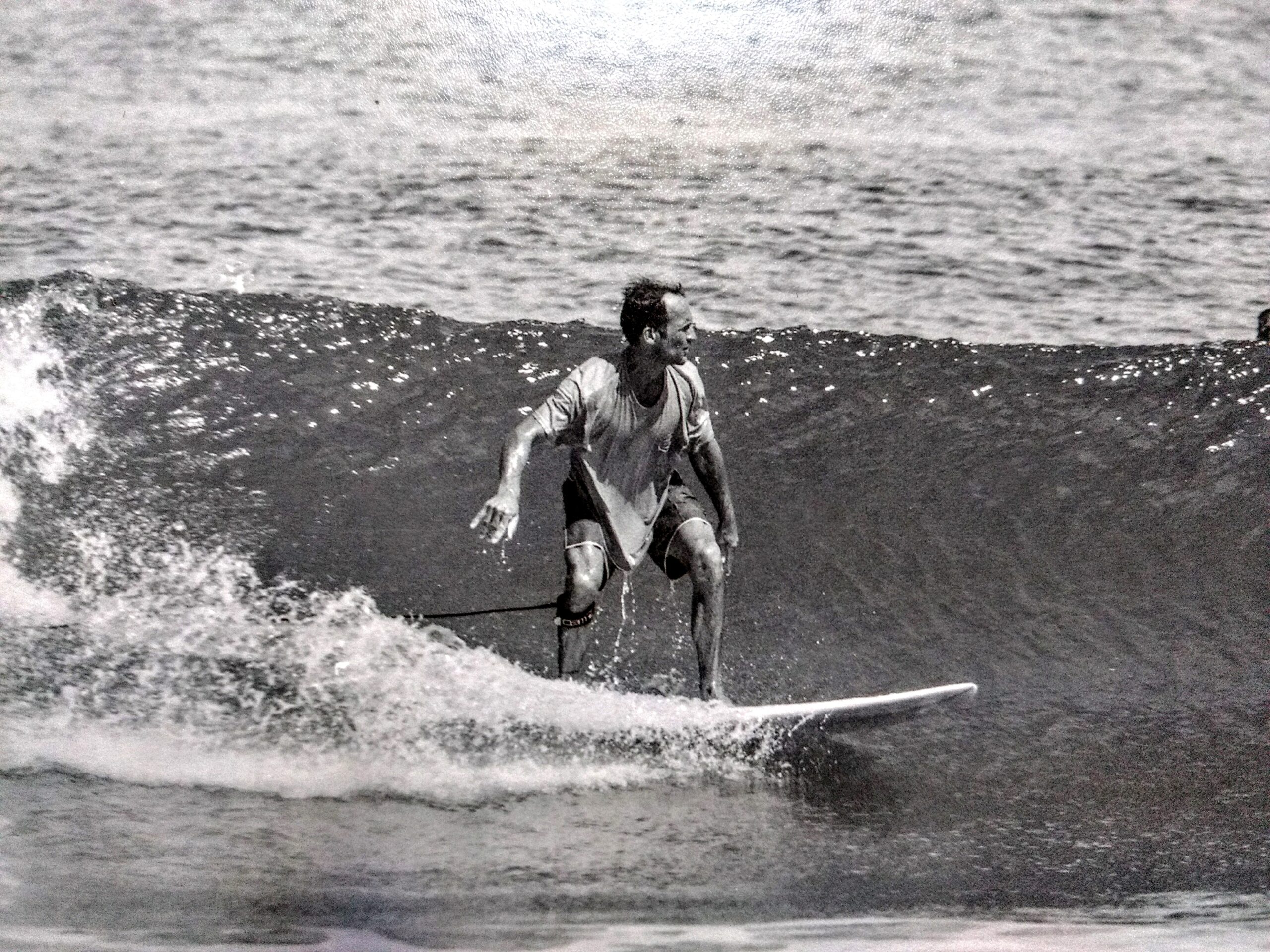 Both kinds of athlete must understand their “waves” are uncontrollable; therefore, they cannot expect to ride each perfectly. Instead, the best strategy is simply to hold on, stay afloat, and ride them out into the calm. For tennis players, the wind, court conditions, or the player on the next court cannot be distractions. Similarly, surfers cannot be diverted by the water temperature, wave size, or spectators on the beach. Tennis players and surfers cannot, however, ignore these external factors; instead, they must take them in, adjust strategically, and hang on as best they can. These obstacles test mental strength and strategic agility; they also lead to triumph. The athlete’s patience to wait out the “waves” and his faith that calm will follow prevent him from falling off the board or “tanking” a match. Without faith that calm will follow the storm, maintaining a pragmatic mindset is unlikely.
Another parallel between the two sports is the aspect of strict solitude. While boxers return to corner coaches after each round, golfers discuss strategy with their caddies, and cyclists rely on their large support teams, both surfers and tennis players are on their own during competition, making repeated split-second decisions without any outside advice. To accomplish this, they must occupy that “zone” that great athletes so often talk about. The ability to “stay in the moment” is crucial for both high-level surfers and tennis players alike. To be “present” mentally allows athletes to let training instincts to take over, rather than to project too far into the future or dwell on the past. In order to remain “in the zone,” athletes frequently turn to their between-action rituals: adjusting their strings, taking deep breaths, or even going to the towel. These allow the athlete to feel a sense of control, regardless of what is transpiring at any given time, and ultimately these rituals can allow the athlete to hang on and battle it out during a wave.
Greg Bolitsky, a high-performance tennis coach, former member of the Canadian national junior tennis team, and active tennis player for 40 years, began surfing roughly 15 years ago. Since then, he credits much of his improvement as a tennis player and as a coach to surfing.
“I have been able to overcome my fears and surf a wide variety of waves comfortably,” said Bolitsky. “As I wait for a return now, I am reminded of the feeling as a wave approaches. Compared to a 6-8 foot wave, no task on the court seems too great now. Even if I or one of my players is down 5-0, 40-0, … we have a chance.”
Bolitsky also praises surfing for its role in recovery and injury prevention.
“I have been injury-free over the past 10 years and noticed my fitness on the court reach an all-time high. I have built muscles that tennis never gave me, allowing me to be balanced on the court in all situations,” said Bolitsky.
Bolitsky affirms that surfing has made him a mentally and physically stronger tennis player and has profoundly affected his approach to coaching high-performance tennis players.
Given the numerous mental and physical benefits of participating in both sports, it is no wonder that tennis greats like Gustavo Kuerten, Pat Rafter and Coco Vandeweghe are also avid surfers. The shared mental acuity both sports require allows tennis players to develop their mental skills while also relieving mental stress. Progressing through the ranks of surfing, from one to ten-foot waves, will build tennis players’ confidence performing beyond their comfort zones as they overcome ever greater challenges.