Tennis: More Than A Sport, A Blueprint for Success
How The Game Prepared Me For a Life Dedicated to the Imaging of Disease
Three weeks into my freshman year at Boston University, amidst the backdrop of the city’s idyllic Back Bay, I traipsed back to my dorm humbled and dazed after retrieving my first round of exam results. Two months earlier, I declared myself “premed” (with an heir of confidence, mind you) at incoming orientation held over summer break. Ever since my dad, a retired Cardiologist, paid a visit to my third grade class, I knew medicine was my calling.
Ergo, you can imagine how I felt holding my Calculus I test – 70% with the curve — in one hand…and my “premed” aspirations in the other. We’re talking intro stuff here, not Advanced Multivariable Calculus 700 – no way to kick off a successful run at getting into medical school. So what did I do, prompting my roommate to wonder if I majored in biology and minored in self-torture? I ripped off the top half of the exam paper and scotch-taped it to my headboard. A few days later, I put my finger on why it bothered me so much.
It was déjà vu. That non-med school worthy performance on my first calculus test felt like something else I experienced before: defeat. Except not in the classroom, but on the tennis court.
All sports are challenging. But tennis, in my opinion, represents the quintessential individual sport, for it commands a great deal of physical and mental fortitude: tennis is equal parts non-contact pugilism and chess. Physically, competitive tennis players have to maximize fast-twitch and slow-twitch movement, being adept at split-second, explosive maneuvers while having stamina to endure grueling matches. Mechanics and form are essential. Wielding a racquet and swinging for the fences doesn’t qualify as tennis. Proper fundamentals (sound groundstrokes, volleys, etc.) are requisite for an effective game and minimize personal injury. Unlike other sports where the ground/turf is constant (think baseball, football, lacrosse) myriad surfaces (hard court, clay, grass) alter the style and cadence of tennis. Tennis players require flexibility, the ability to adapt.
Tim Gallwey, author of The Inner Game of Tennis, imparts an eastern philosophical spin, revealing that tennis is a metaphor for life. Overcoming anxiety and self-doubt are requisite in developing the ability to play free and uninhibited. John Curtis, a good friend, executive director of The Manhattan Tennis Academy and former NYU head coach states: “tennis is great for the mind, body and spirit – when played at a high level, a player attains a perfectly harmonious state amongst the senses.”
Tennis, as Rafael Nadal succinctly notes in his autobiography RAFA, is a sport for the mind. Winning matches requires strategy and insight. Constructing and executing points entails positioning one’s own game against that of an opponent’s; like in chess, play variables and iterations are infinite. In the heat of a match when tension runs high, concentration and focus intensify.
Last, but not certainly not least, tennis fosters grit. Whereas victory feels euphoric, loss can be devastating – it’s only you out there, no teammates to blunt the pain. Recovering from defeat, and embracing and learning from failure is a vital skill unto itself.
As a junior training at the Centercourt Tennis Academy in Chatham, NJ back in the 1990s, my coach encouraged me to play as many matches as I could, not just to bolster my rankings but to toughen my armor and help me overcome my fear of failure. Competitive tennis forged in me qualities that empowered me to hammer through my premed curriculum in college, navigate through the academic rigor of medical school, withstand the physical strain of residency, and practice with confidence as a board-certified Neuroradiologist.
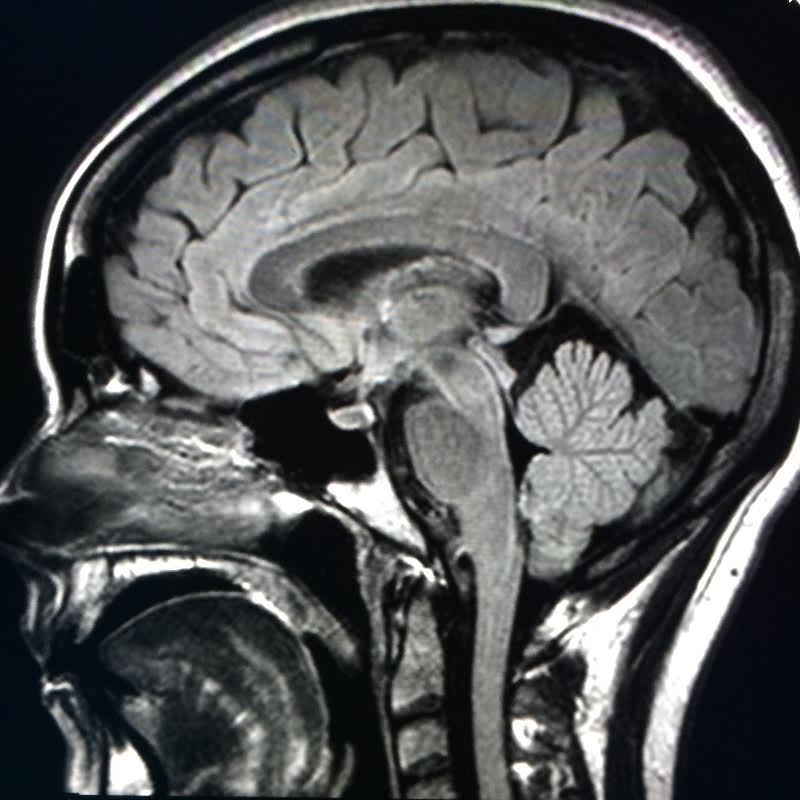
Residency in diagnostic radiology is four years, generally preceded by an internship year in medicine or surgery. Specialization has become the norm, with most fellowships lasting one year thereafter. In medical school we learn anatomy by rote memorization. Radiologists must master imaging anatomy – the way organs and disease appear on x-ray, computed tomography, ultrasound and magnetic resonance imaging. As a Neuroradiologist, I triangulate lesions in the brain by carefully scrutinizing MR imaging in three orthogonal planes. Developing a heightened spatial orientation takes time, discipline and commitment. Invoking Malcom Gladwell’s “10,000 hour rule”, the beginner radiologist, like the novice tennis player, has to work tirelessly. To become good at anything requires practice, lots of it.
K. Anders Ericsson concluded that, “individual differences, even among elite performers, are closely related to assessed amounts of deliberate practice. Many characteristics once believed to reflect innate talent are actually the result of intense practice extended for a minimum of 10 years.”
And yet, this is not enough. Hours on end plowing through medical films, is meaningless, devoid of value, sans attention, feedback and reflection. Practice must be deliberate.
According to Geoff Colvin, deliberate practice requires heavy repetition, continuous feedback, intense effort, and (unfortunately) isn’t always fun. 10,000 hours spent hitting forehands without sufficient body coil, adequate unit turn, outside the optimal strike zone will at best earn you a few lucky points, at worst, tennis elbow. Radiologists, in training and in practice, develop and maintain diagnostic acumen through painstaking effort: pouring through subspecialty-specific textbooks, continually reviewing peer-reviewed medical literature, and thoughtfully reading patients’ examinations in real-time. The best physicians in any field, especially Radiologists, remain humble, seek constructive criticism and are keenly aware of the Dunning-Kruger effect, the illusion of mastery.
Revisiting that sense of failure I sensed after bombing my first calculus test, it was one of several missteps along the rocky footpath towards becoming a radiologist. What I wanted to do, what I needed to do, was reenergize and reapply myself as I had done after losing a close match or tournament. I had to seek guidance, pinpoint my weaknesses and stretch beyond my limits. At age twelve, I had a reasonable two-handed backhand but my forehand was the stronger wing; seasoned players would instantly spot my weakness. My coach believed that a one-hander better suited my playing style, would in time provide me enhanced versatility. Relearning the basics felt like taking, not two, but three steps back. Yet over time, through deliberate practice, the force and efficiency of my groundstrokes equalized.
After an abysmal first round of college exams during my freshman year, I double downed, hit the books hard, partied less, and resourced my professors and teaching assistants for help where I needed it most. As a second year radiology resident, I remembering thinking I could never pursue sub-specialization in Neuroradiology; the specialty seemed too difficult, too cerebral (pun intended).
My Chairman, a radiologist from the “days of the iron men”, inspired me to reassess. He felt that hard work – grit – trumped IQ. Angela Duckworth, author of Grit, aptly summarizes: “To be gritty is to keep putting one foot in front of the other. To be gritty is to hold fast to an interesting and purposeful goal. To be gritty is to invest, day after week after year, in challenging practice.”
Approaching my sixth year of practice, advancing beyond the embryonic stages of my postgraduate career, I enjoy being a Radiologist. But everyday isn’t a breeze despite years of education and experience. On the contrary. You never get used to that feeling of uneasiness, embarrassment and remorse when a colleague approaches you about a finding you missed on a film you read yesterday, the week before, or worse…two years ago. All radiologists, including authorities in the field, aren’t perfect. What separates the wheat from the chaff, the best from the average, comes down to attitude, how you handle failure. Learning from failure means forgiving yourself for mistakes made, learning from them, and going forward as Travis Bradberry outlines in Emotional Intelligence 2.0.
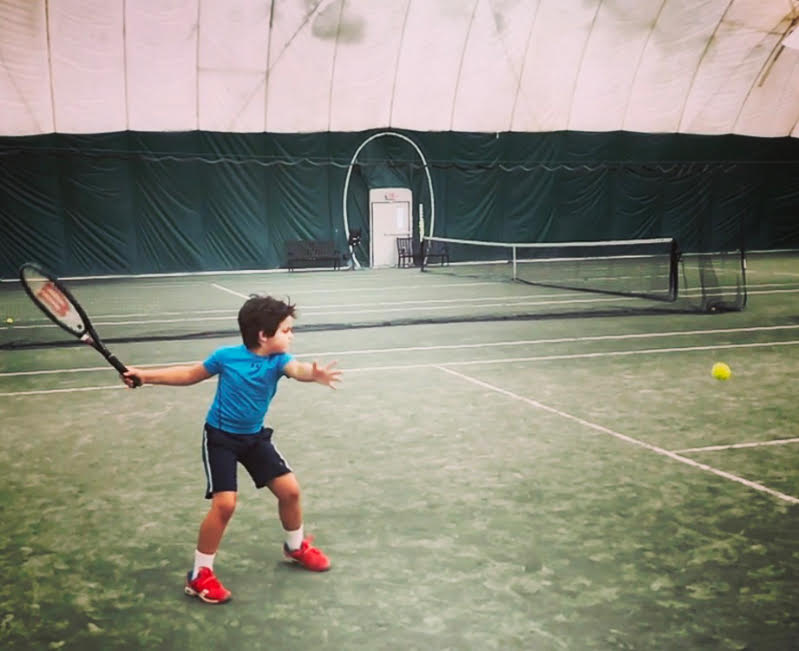
As a departing note, I cannot help but draw attention to my son, Rafael. If it crossed your mind, yes I’ll admit, my wife and I named him after the formidable Spaniard, the “King of Clay”, 14-time Grand Slam victor, Rafael Nadal. Doing what any parent does best, I taught my son what I know, what I love. When he was barely three, I gently fed him Koosh balls in the living room of our tiny, one-bedroom apartment in Hoboken, NJ. In the suburbs, we had access to public courts, even a clay court in a complex where we lived briefly. I never coerced Rafa to play tennis, but encouraged it, kept it light and fun (what iPad?). First, making contact was the name of the game. Now, at age six, Rafa has a reliable serve, dependable groundstrokes and is happy to charge the net following approach shots.
Thrice per week, he trains and plays matches at Center Court Tennis Academy in NJ under the direction of talented coaches, surrounded by motivated players alike. In a league of about 25 kids – ranging from eight to eleven years old –Rafa usually hovers near the top. As of March 2017, a short, slow-motion clip of him ripping a forehand accrued 80,000 hits on The Functional Tennis Player, an Instagram account that features ATP professionals, satellite players and top-flight juniors from around the world. Win or lose, we strive to remain neutral, opting instead to praise his effort and work ethic. As conceptualized by Gallwey, players often get in the way of their own success by prioritizing external validation instead of playing for the sake of it, to enjoy themselves. We seek to inculcate Gallwey’s philosophy of tennis (of life, really) through the medium he wrote about 45 years ago. If he continues to love tennis and excel on court, great; tennis is a tough sport. More importantly, my wife and I believe Rafa is learning how to lead a meaningful life through the rigor of a game that challenges both mind and body.
Despite research (read: backlash) against Gladwell’s “10,000 hour rule” noting that deliberate practice accounts for far less towards the variance in athletic performance, I maintain my stance. No one magically excels at a sport, particularly tennis, without: (a) putting in the reps (b) continual feedback (c) being passionate, having the desire to improve (d) being gritty. This is the mindset of Clay Bibbee, USPTA Master Professional and CEO of the Center Court High Performance Tennis Academy. For most people, 20,000 hours spent practicing whichever sport they choose will not land them an interview on SportsCenter…but they’ll be pretty damn good. If this isn’t a powerful takeaway, I don’t know what it is. For all aspiring physicians – now and in the future – remember the words of Roger Federer, arguably the greatest tennis player of all time:
“There’s no way around the hard work. Embrace it.”